The quick answer
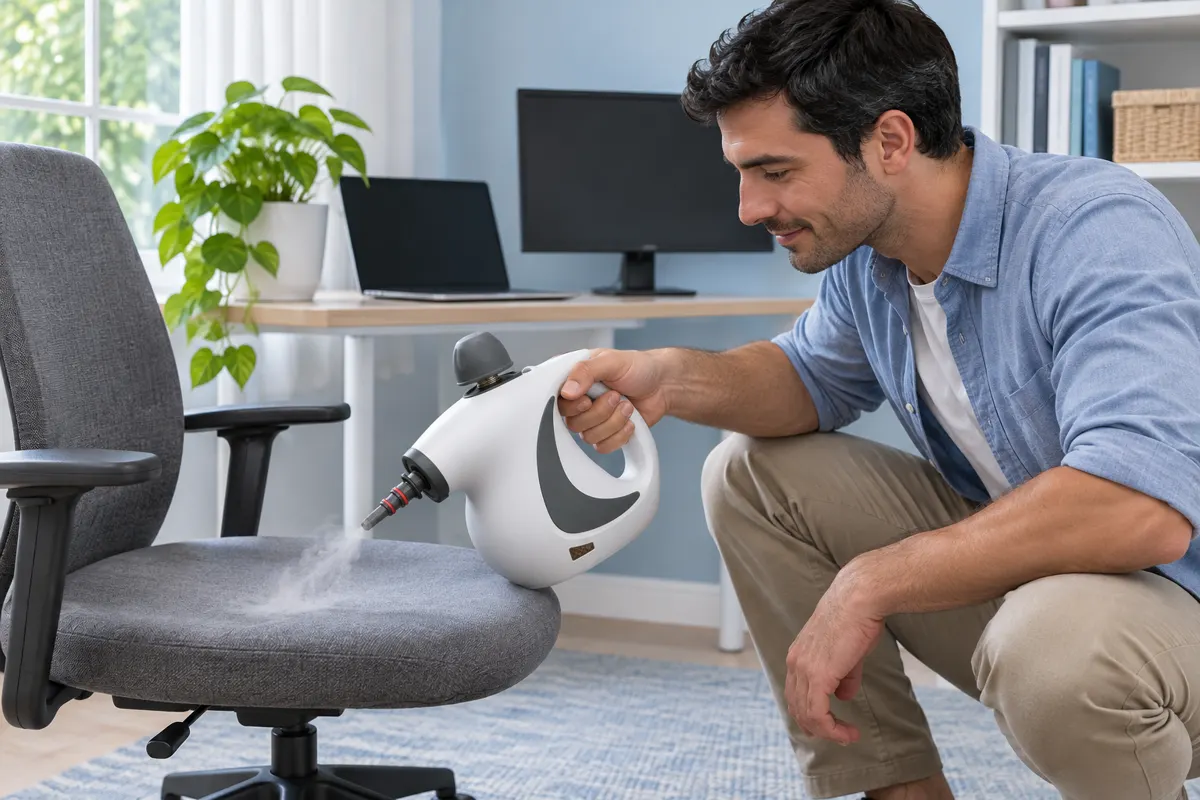
To clean an office chair, check the cleaning code on the tag, vacuum it, treat stains and sweat odor on the fabric with light passes of steam or mild soapy water (only on W or W/S fabric), blot dry, and finish with the armrests, gas lift and wheels. Let the seat dry fully before you sit again. A handheld steam cleaner like the Qinux Vapoxis does the fabric, mesh, armrests and casters with nothing but tap water.
Your office chair is the piece of furniture you use most. Eight hours a day, it absorbs sweat through your clothes, catches crumbs from desk lunches, gets the occasional coffee drip and collects dust in every seam. In a home office it is often worse, because nobody from facilities ever comes to clean it. The result is a gray, slightly shiny seat and a faint smell you stop noticing — until a colleague sits in it.
The good news: most office chairs clean up very well at home in under an hour, and you can keep them fresh with a few minutes a week at your desk.
Step 0: read the cleaning code on the tag
Turn the chair over and look for a small label under the seat. Most upholstered chairs carry a standard cleaning code:
| Code | What it means | Steam and water? |
|---|---|---|
| W | Water-based cleaners are fine | Yes, light passes |
| W/S or SW | Water-based or solvent-based | Yes, light passes |
| S | Solvent-based cleaners only | No water or steam |
| X | Vacuum or brush only | No |
No tag? Follow the manufacturer’s care guide if you can find it online, and always test a hidden spot (the back of the seat, under the edge) before you clean the whole chair. Leather and faux leather are a different job: wipe them with a barely damp cloth and the conditioner the maker recommends, no steam.
What you need
- Vacuum with an upholstery or crevice tool
- Two or three microfiber cloths
- A handheld steam cleaner with a brush attachment, or a bowl of warm water with a drop of mild dish soap
- An old toothbrush for seams and wheels
- Baking soda (optional, for odor)
How to clean a fabric office chair, step by step
- Vacuum everythingSeat, back, the gap between them and every seam. Loose dust turns into muddy streaks if you add moisture first.
- Test a hidden spotA few seconds of steam or a dab of soapy water, then blot and let it dry. No color change? Carry on.
- Treat stains firstCoffee, food and ink-free marks: work from the outside of the stain inward with short passes of steam and the brush, blotting with a dry cloth after each pass.
- Refresh the whole seatQuick, overlapping passes a few inches from the fabric. The goal is warm and barely damp, never soaked; padding that gets wet dries slowly.
- Blot and dryPress a dry microfiber cloth over the seat. Tilt the seat back or raise it, open a window or point a fan at it. Wait until it is completely dry before sitting.
- Deodorize if neededOnce dry, sprinkle baking soda, leave it a few hours and vacuum it off.
This is the job a handheld steamer like Vapoxis is built for: hot steam loosens body oils and grime in the fabric and the brush lifts them, without leaving soap residue that attracts new dirt.
Sweat smell and that shiny gray seat
The darker, slightly shiny patch on the front edge of the seat and the top of the backrest is body oil and sweat, not just dust. Water alone struggles with oil; heat helps. That is why warm steam passes followed by blotting work better than a cold wipe. If the smell keeps coming back, it is usually in the foam, so do two light rounds a day apart instead of one heavy soaking.
Mesh backs, armrests, gas lift and wheels
- Mesh back — vacuum, then light steam from a little further away. Mesh dries fast; keep moisture off the mechanism.
- Armrests — the most-touched part of the chair. Wipe with a warm, damp cloth or a quick pass of steam and dry immediately.
- Gas lift and base — wipe dust and coffee drips with a damp cloth; do not spray water into the cylinder or tilt mechanism.
- Wheels (casters) — turn the chair over, pull out hair and carpet fibers with the toothbrush or tweezers, then steam or wipe the wheels and dry them. Clean casters roll better and stop dragging dirt across the floor.
Keeping the chair (and desk) fresh during the workweek
A deep clean every month or two is enough if you add a few habits to the workday:
- Friday afternoon, two minutes: vacuum the seat or brush it off and wipe the armrests.
- Eat away from the chair when you can. Desk lunches are the number one source of crumbs and grease spots.
- Blot spills immediately. A coffee drip blotted in ten seconds rarely becomes a stain.
- Air the chair out. At the end of the day, push it back from the desk so the seat can breathe.
- Clean the desk too. Keyboard, mouse, phone and desk surface collect the same daily grime; a damp microfiber cloth works for most of it. Follow the device makers’ instructions for electronics and never steam them.
Shared office chairs and hot desks get even more use. If your workplace allows it, a quick pass on the armrests and seat edge at the start of your shift is an easy courtesy. For couch cushions and other fabric at home, the same method applies; see what you can and can’t steam clean and our guide on renting vs. buying a steam cleaner.
Our recommendation: Qinux Vapoxis
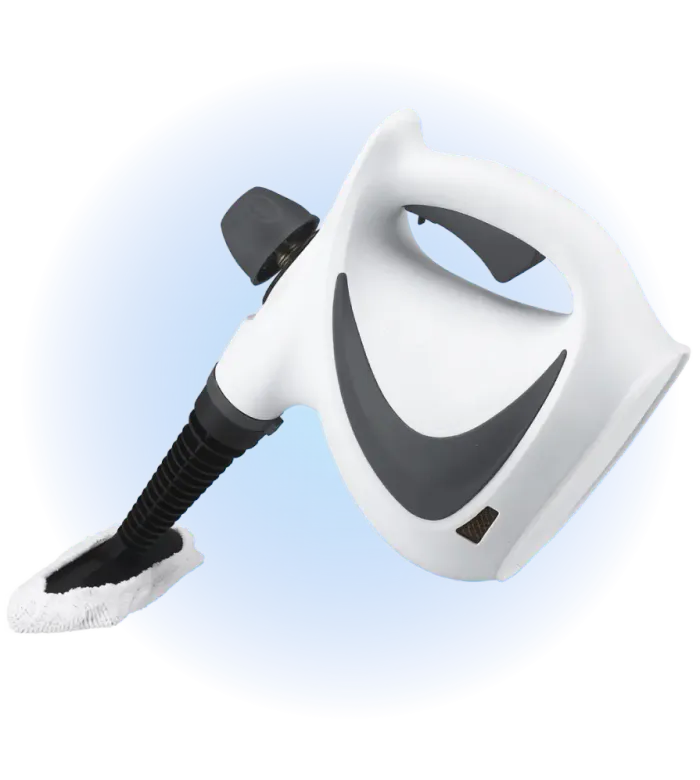
For office chairs, desk chairs and the rest of the fabric in a home office, the Qinux Vapoxis is the steam cleaner we recommend. It is a compact handheld steamer that is ready in minutes, uses only tap water and gets into exactly the places a chair hides dirt: seams, mesh, armrests and wheels. No soap residue, no harsh fumes in the room where you work.
- Just tap water — no cleaning solution to buy, no residue on the fabric.
- Hygienic clean — the maker states its steam eliminates up to 99.9% of bacteria on treated surfaces.
- Attachments for every part — brushes for fabric and casters, angled nozzles for seams and corners.
- Small and light — easy to use on a chair at desk height, stores on a shelf.
- Beyond the chair — the same tool handles grout, the stovetop, glass, the mattress and car seats.
Customers rate it 4.8/5 on the official site, and 94% say they would recommend it. A single unit is $109, the most popular 2-pack is $99 each and the 5-pack drops to $79 per unit. Free shipping, a launch discount of up to 50% and a 14-day money-back guarantee. Sold only through the official website.
Want the full picture first? Our complete Vapoxis review covers room-by-room results and what is in the box, and the Vapoxis home page has a short overview with current prices. Always follow the chair’s cleaning code and the maker’s instructions for the steamer.
Frequently asked questions
How do I clean a fabric office chair?
Check the cleaning code on the tag, vacuum the seat and back with an upholstery tool, treat spots with a little mild soap and water or light passes of steam if the code allows water, blot with a dry microfiber cloth and let the chair air-dry with the seat tilted or raised. Finish with the armrests, gas lift and wheels.
What do the cleaning codes W, S and X mean on a chair?
They are standard upholstery codes. W means water-based cleaners are fine, S means solvent-based cleaners only (no water), W/S means either, and X means vacuum or brush only. Steam is water, so only use it on W or W/S fabric, and always test a hidden spot first.
How do I get the sweat smell out of my office chair?
Vacuum, then go over the seat with light, quick passes of steam (on W or W/S fabric), blotting as you go, and let it dry completely with air moving. Baking soda left on the dry seat for a few hours and vacuumed off also helps. Repeat every few weeks if you sit in it all day.
Can you steam clean a mesh office chair?
Yes, with light passes from a distance, because mesh dries quickly. Avoid soaking the frame or the seat mechanism, and do not steam leather, faux leather or any part the manufacturer says not to wet.
How often should I clean my office chair?
A quick vacuum and wipe of the armrests every week, spot-cleaning whenever something spills, and a deeper clean of the seat every one to three months, depending on how many hours you sit in it.