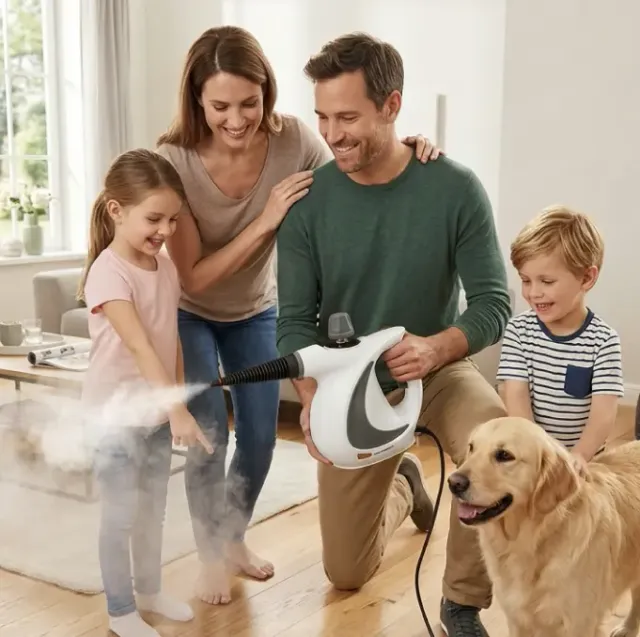
Steam cleaners have a reputation as a do-everything tool, and for good reason: plain water heated into pressurized steam loosens grease, soap scum and grime on dozens of surfaces, with no chemicals. But “almost everything” is not “everything.” Here is the practical list.
15 surfaces that love steam
In the kitchen
- Stovetops and burner grates — steam softens baked-on spills so they wipe off.
- Range hoods — the sticky grease film is steam’s favorite target.
- The outside of the oven and microwave — handles, doors, control panels (avoid vents and electronics).
- Tile backsplashes and grout — ceramic and porcelain tile handle steam beautifully.
- Sinks and faucets — the narrow nozzle blasts the grime around the base.
- Sealed countertops — granite and quartz that are properly sealed, with a quick pass.
In the bathroom
- Shower tiles and grout — soap scum and mildew lift without bleach.
- Glass shower doors and mirrors — steam plus a squeegee leaves them streak-free.
- Toilet base and bathtub — reaches the spots a brush misses.
Around the house and car
- Windows and window tracks — tracks collect years of grit only steam reaches.
- Sofas and upholstered chairs — with a fabric cover, steam refreshes most W or S/W-coded fabrics.
- Mattresses — a quick pass refreshes the surface; let it dry fully before making the bed.
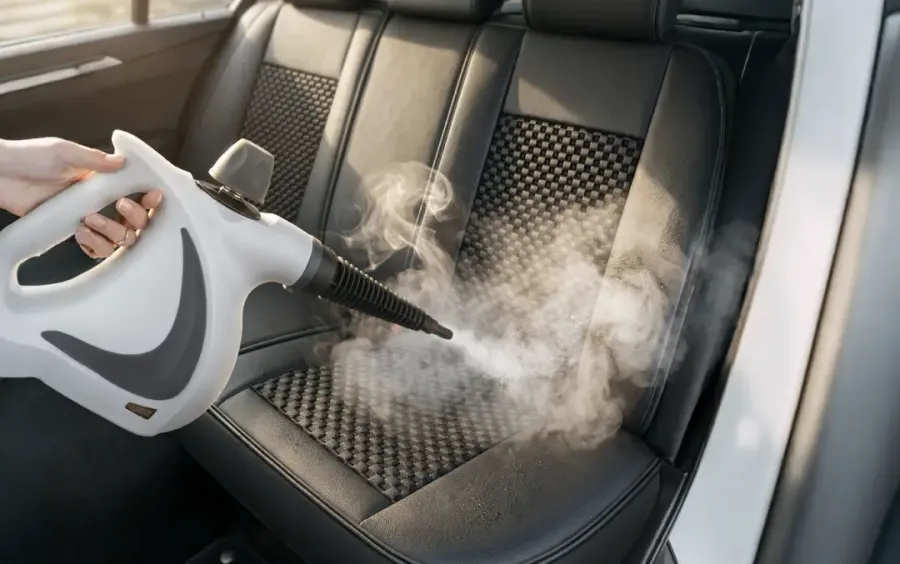
- Car seats, mats and door panels — crumbs, sticky spots and fingerprints.
- Sealed tile and vinyl floors — spot-clean edges, corners and stains.
- Outdoor furniture and grills — metal, plastic and resin furniture, plus grill grates.

6 surfaces to avoid
- Unsealed or waxed wood — moisture and heat can swell the grain and lift finishes.
- Laminate flooring — steam can get into the seams and cause swelling.
- Delicate fabrics — silk, velvet and anything with an S-only or dry-clean tag.
- Unsealed natural stone — porous marble and limestone can absorb moisture and discolor.
- Cold glass in winter — a sudden blast of heat on very cold glass can stress it; warm the room first.
- Electronics and outlets — never steam anything that plugs in.
Five safety habits
- Test a hidden spotOn any fabric or finish you are unsure of, try a small area first.
- Keep movingDon’t hold the steam on one spot of fabric or sealed stone for long.
- Use the right attachmentJet for grout, brush for stovetops, squeegee for glass, cloth cover for fabric.
- Wipe as you goSteam loosens the dirt; a microfiber cloth removes it.
- Never aim at people or petsSteam is hot. Keep the unit out of reach of kids while in use.
The one tool that covers the whole list
Notice how many of those 15 surfaces are above the floor? That is why a handheld steam cleaner is the most useful type for most homes. Our pick is the Qinux Vapoxis: compact, quick to heat, water-only, and supplied with the full attachment set — jet and angled nozzles, round brush, window squeegee, microfiber cover and extension hose — so it can handle everything from the range hood to the back seat of your car.
Frequently asked questions
Can you steam clean a couch?
Most synthetic and cotton-blend upholstery handles steam well. Check the care tag: codes W or S/W are generally steam-friendly. Use a fabric cover on the nozzle, keep moving, and let it air-dry. Avoid silk, velvet and fabrics marked S only.
Can you steam clean hardwood floors?
Only well-sealed hardwood, briefly and with a cloth cover, and many manufacturers advise against it. Unsealed, waxed or worn wood and most laminate should not be steamed because moisture and heat can make them swell.
Is steam cleaning safe for kids and pets?
Yes, it is one of the safest ways to clean because it uses only water and leaves no chemical residue. Just keep the hot unit out of reach while in use and never point the steam at people or animals.