The quick answer
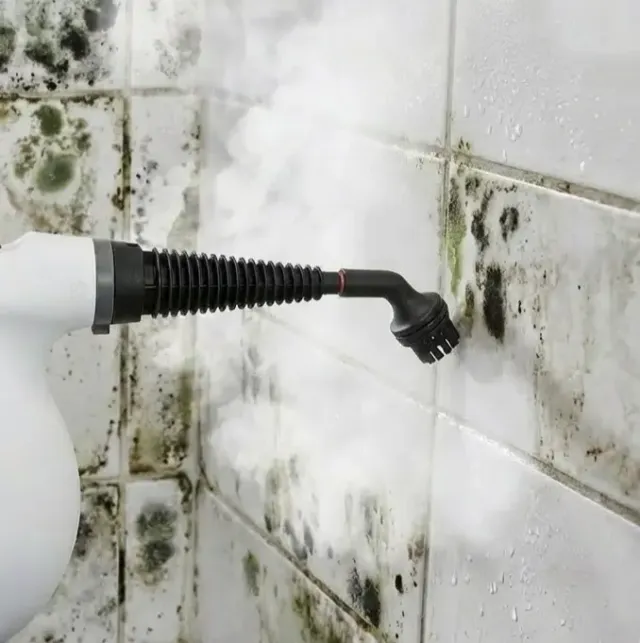
A bathroom that smells soon after you clean it almost always has a hidden source: urine soaked into the grout and caulk around the toilet, residue under the rim, mildew in the shower caulk, curtain or bath mat, gunk in the drain or sink overflow, or a plumbing issue like a dry P-trap or a failing wax ring. Fragrance covers it; reaching the source fixes it. For the residue in grout, caulk and corners, hot steam from a handheld cleaner like the Qinux Vapoxis is the fastest chemical-free fix.
You scrubbed the bowl, wiped the sink, mopped the floor and lit a candle. Two hours later the smell is back: faintly sour, a little musty, maybe even a whiff of sewer. It is one of the most frustrating cleaning problems because it feels like the work did not count. The reason is simple: most everyday bathroom cleaning targets the surfaces you can see, and most bathroom smells live somewhere else. Here is how to find out where yours is coming from, by the type of smell, and what to do about each source.
First, name the smell
| What it smells like | Most likely source | Where to look |
|---|---|---|
| Sour, ammonia, “old urine” | Urine residue in porous surfaces | Grout and caulk at the toilet base, behind the toilet, under the seat hinges |
| Musty, damp basement | Mildew and trapped moisture | Shower caulk, curtain, bath mat, towels, behind the tank |
| Rotten eggs, sewer | Sewer gas | Unused drains (dry P-trap), toilet seal, vent problems |
| Stale, sweetish, swampy | Biofilm in drains | Sink and shower drains, the sink overflow hole |
Hidden spot 1: the grout and caulk around the toilet
This is the number one cause of a bathroom that smells like urine after cleaning. Tiny splashes land on the floor around the base and on the side of the toilet, especially in homes with kids or with people who stand. Grout and caulk are porous, so the urine soaks in, bacteria feed on it, and the room gives off a faint ammonia smell no matter how clean the bowl is.
The fix: clean the floor in a circle about two feet around the toilet, paying attention to the grout lines and the caulk bead at the base. Heat helps here because it pushes residue out of the pores so a cloth can lift it. A handheld steamer with a jet nozzle, like the Qinux Vapoxis, gets into the grout lines without harsh chemicals; wipe right behind it with a microfiber cloth. If the caulk at the base is cracked, stained through or peeling, replacing it removes the reservoir completely.
Hidden spot 2: under the rim, the seat hinges and behind the toilet
Under the rim, scale and residue build up where the brush barely reaches. The bolts and hinges of the seat collect drips. The back of the toilet and the wall behind it are rarely cleaned at all. Take the seat off if it has quick-release hinges, clean the hinge area and the bolts, and wipe the outside of the bowl all the way down to the floor and the wall behind it.
Hidden spot 3: the shower caulk, curtain and bath mat
If the smell is musty rather than sour, follow the moisture. Caulk lines in the shower and tub stay wet and grow mildew. Shower curtains and liners collect soap scum and film along the bottom hem. Bath mats and towels that never fully dry are another classic source. Clean the caulk lines and the bottom of the curtain, and wash mats, towels and the liner on a hot cycle if their labels allow it. If you see pink or orange film, our guide to the pink slime in your shower explains what it is and how to keep it from coming back.
Hidden spot 4: drains and the sink overflow
Drains collect hair, soap and skin cells that turn into a slimy biofilm with a stale smell. The small overflow hole in the sink is another spot almost nobody cleans. Pull and clean the drain stoppers and covers, clear hair from the shower drain, and clean around the drain openings and the overflow. Then flush with plenty of hot tap water.
Hidden spot 5: a dry P-trap (the sewer smell)
Every drain has a curved pipe, the P-trap, that holds a little water to block sewer gas. In a guest bathroom, a rarely used tub or a floor drain, that water can evaporate, and sewer gas comes straight up. The fix: run water in every drain for about a minute. If that solves it, run the unused ones once a week. No cleaner, steam or spray can fix this one, but it is free.
Hidden spot 6: the toilet seal
If the sewer smell is strongest right at the base of the toilet, the toilet rocks slightly, or you see water at the base, the seal under the toilet (often a wax ring) may be failing. That is a job for a plumber, and it is worth doing soon, since leaks under the toilet can damage the floor.
Hidden spot 7: the air itself
A bathroom without good ventilation stays humid for hours after every shower, and humidity feeds every other source on this list. Run the exhaust fan during the shower and for a while after, keep the door open when the room is not in use, and check that the fan actually pulls air (a tissue held near it should be drawn in). Dust the fan cover too; a clogged cover moves much less air.
Why air fresheners make the problem last longer
Sprays, plug-ins and candles mask the smell, so the source keeps building. Residue in grout and caulk only grows over time, and the odor you notice when the fragrance fades gets stronger. Bathrooms are also small rooms where strong chemical fumes linger. That is why our approach is always the same: find the source, remove it, and dry the room. We use the same logic in 8 signs your home needs a deep clean.
A 20-minute odor reset
- Run every drain for a minuteRefills dry traps and rules out sewer gas.
- Strip the textilesBath mat, towels and shower liner go in the wash.
- Steam the toilet zoneGrout and caulk around the base, the hinges, the outside of the bowl and the wall behind it. Wipe as you go.
- Steam the shower linesCaulk, grout and the corners where water sits.
- Clean drains and the overflowStoppers, covers and openings, then hot water.
- Dry the roomFan on, door open, window cracked if you have one.
Our recommendation: Qinux Vapoxis
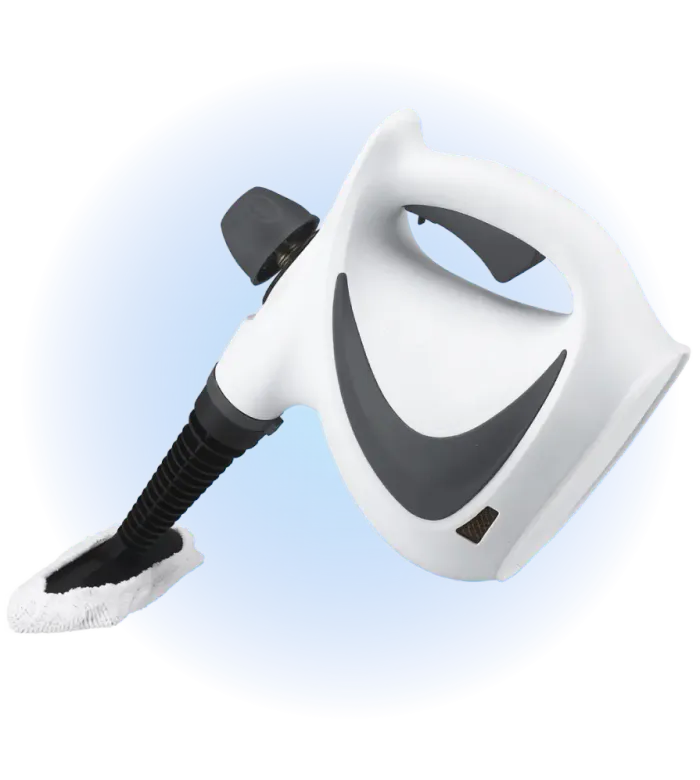
If your bathroom keeps smelling no matter how often you clean it, the Qinux Vapoxis is the tool we recommend to go after the source. It is built for exactly the spots where bathroom odors hide: porous grout, caulk lines, corners and the base of the toilet, and it does it with nothing but tap water, so there are no harsh fumes in a small room.
- Reaches into grout and caulk — hot steam pushes residue out of porous lines so a cloth can lift it.
- Hygienic, chemical-free clean — the maker states its steam eliminates up to 99.9% of bacteria on treated surfaces, with no residue left behind.
- Attachments for every bathroom job — jet and angled nozzles for grout and corners, brush heads for tile, a squeegee for glass and shower doors.
- Handheld and quick to heat — easy to grab for a 20-minute reset instead of an afternoon of scrubbing.
- Family- and pet-friendly — just water, no chemical smell lingering after you clean.
Customers rate it 4.8/5 on the official site, and 94% say they would recommend it. A single unit is $109, and bundle pricing drops to $79 per unit in the 5-pack (the 2-pack at $99 each is the most popular). Free shipping, a launch discount of up to 50% and a 14-day money-back guarantee. Sold only through the official website.
Want the full picture first? Our complete Vapoxis review covers room-by-room results and what is in the box, and the home page has a short overview with current prices. Always follow the maker’s instructions for the steamer and for the surface you are cleaning, and call a plumber for drain or toilet-seal problems.
Frequently asked questions
Why does my bathroom smell like urine even after cleaning?
Usually because urine has soaked into porous grout and caulk around the base of the toilet, or into the gaps behind and under it, where a quick wipe never reaches. Bacteria feeding on that residue release ammonia-like odors. Cleaning the grout lines and the toilet base deeply, not just the bowl and seat, is what usually fixes it.
Why does my bathroom smell like sewer?
The two most common causes are a dry P-trap in a drain that is rarely used (the water seal that blocks sewer gas has evaporated) and a failing wax ring under the toilet. Run water in every drain for a minute to refill the traps. If the smell is strongest at the toilet base and does not go away, have a plumber check the seal.
How do I get rid of a musty smell in my bathroom?
A musty smell usually means moisture and mildew in caulk, grout, the shower curtain, the bath mat or behind the toilet tank. Clean those spots, wash textiles hot, and run the exhaust fan during and after every shower so the room dries out.
Can a steam cleaner remove bathroom odors?
Steam can remove the residue that causes many bathroom odors: urine in grout, soap scum, mildew in caulk lines and grime around drains. The maker of the Qinux Vapoxis states its steam eliminates up to 99.9% of bacteria on treated surfaces. Steam does not fix plumbing problems such as a dry trap or a broken toilet seal.
How often should I deep clean around the toilet?
A quick wipe of the floor and base every few days helps a lot, especially in homes with young kids. A deeper clean of the grout and the gaps around the toilet every week or two keeps urine residue from building up.