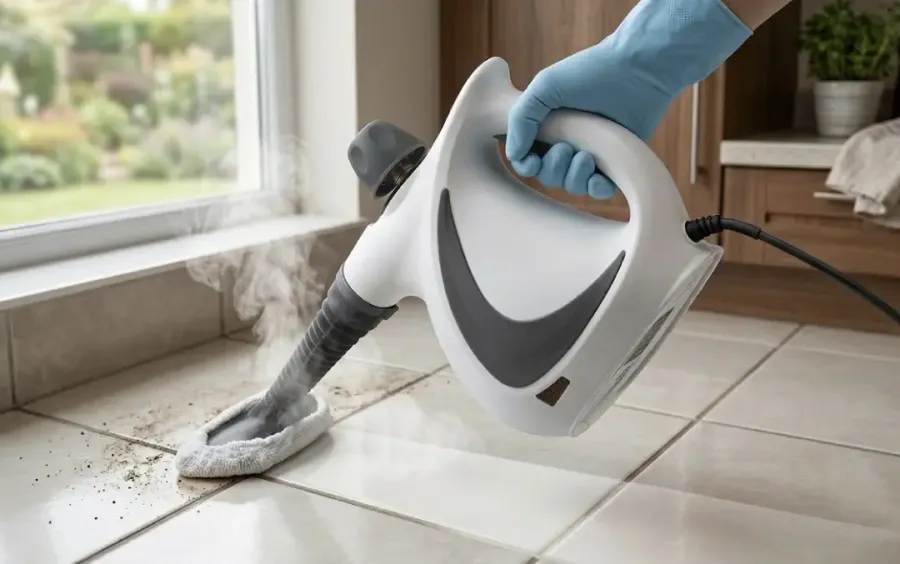
The quick answer
Your home needs a deep clean when regular cleaning stops working: smells come back a day after you clean, grout looks darker than the tile, kitchen cabinets feel tacky, shower spots will not wipe off, dust reappears overnight and fabrics smell stale. Those are signs of buildup, not mess. Hot steam is one of the fastest ways to reset it, and a handheld steamer like the Qinux Vapoxis does it with nothing but tap water.
A home can look tidy and still be overdue for a real clean. Counters are clear, the floor is swept, the sink is wiped, and yet something feels off: a smell you cannot place, a film you notice when the light hits the cabinets, grout that never quite looks clean. That is the difference between mess and buildup. Mess is what everyday cleaning handles. Buildup is what slowly collects in the places a quick wipe never reaches, and it sends signals long before it becomes obvious. Here are the eight most common ones and what each is telling you.
1. A smell that comes back after you clean
What it is telling you: the source is not on the surface. A bathroom that smells fresh for a day, then musty again, usually has residue in grout lines, around the toilet base or in the shower caulk. A kitchen that always smells faintly of old cooking often has grease in the range hood or on the backsplash. A living room that smells stale may be holding odors in the sofa or rug.
What to do: stop covering it with fragrance and go after the source: grout, caulk, hood filters, upholstery. Steam reaches into those textures, and heat lifts the residue that holds the smell. For the bathroom specifically, see why your bathroom still smells after you clean it.
2. Grout that is darker than the tiles
What it is telling you: grout is porous, so it soaks up dirt, soap and moisture. When the lines are visibly gray or brown next to clean tile, it is not the color fading; it is grime packed into the surface. In showers, dark spots in grout and caulk can also be mildew.
What to do: a jet of hot steam pushes grime up out of the pores so it wipes away. Our step-by-step guide on how to clean grout without scrubbing shows the technique.
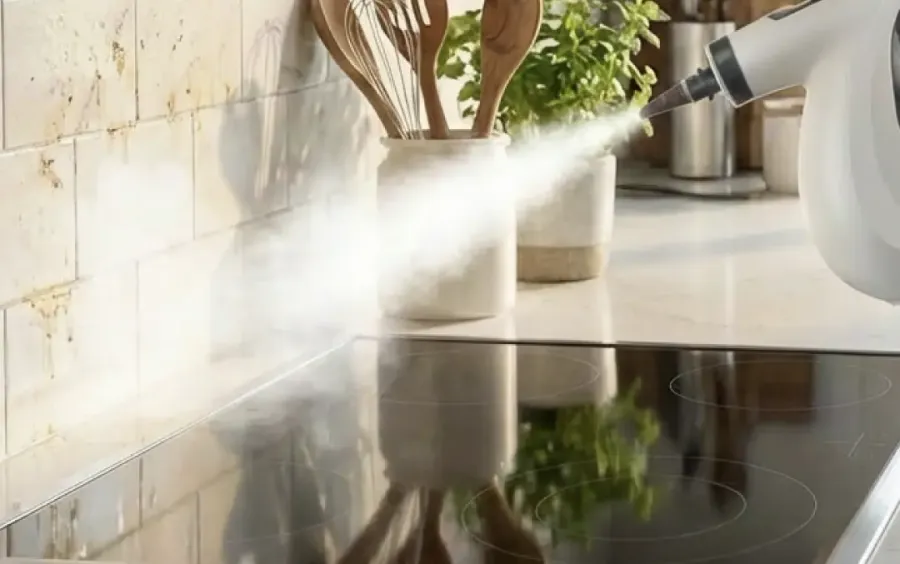
3. A sticky film on kitchen cabinets, hood or backsplash
What it is telling you: every meal releases a fine mist of grease that settles on nearby surfaces and slowly hardens. When a cabinet door feels tacky or dust clings to the top of the fridge, you are touching months of cooking.
What to do: heat softens bonded grease so it wipes off instead of smearing. We cover the full method in how to remove kitchen grease without harsh chemicals.
4. Shower spots that wiping does not remove
What it is telling you: cloudy glass, a whitish film on tiles and pink or dark spots along the caulk are soap scum, mineral deposits and microbial film built up in layers. A pink film in particular is usually bacteria, which we explain in what is the pink slime in your shower.
What to do: steam loosens soap scum and film from tile, glass and fixtures; follow with a squeegee or microfiber cloth, then keep the bathroom ventilated so it dries between showers.
5. Dust that comes back almost overnight
What it is telling you: dust is collecting somewhere it is not being removed: in fabrics, on vents, along baseboards, under and behind furniture. Every time you walk past or sit down, some of it is stirred back into the air.
What to do: clean the reservoirs, not just the visible shelves: vacuum and refresh upholstery, wipe vents and baseboards, and move furniture once in a while. If someone in the home is sensitive to dust or dander and feels worse indoors, a thorough clean and good ventilation are sensible first steps, and a doctor can help if symptoms persist.
6. Fabrics that look dull or smell stale
What it is telling you: sofas, mattresses, car seats and rugs quietly absorb body oils, spills, pet odors and dust. When fabric looks flatter and darker in the spots people use most, or smells faintly stale, it is holding residue.
What to do: a handheld steamer refreshes upholstery with very little moisture. See our guides on steam cleaning a mattress and steam cleaning car seats, and always check the fabric care label first.
7. Grime in tracks, corners and edges
What it is telling you: window and sliding-door tracks, the edges where floors meet baseboards, the gap beside the stove and the base of the toilet are where dirt goes to hide. If you see a dark line in any of them, the rest of the room is probably due too.
What to do: a narrow jet nozzle is ideal for tracks and corners: steam, then wipe or vacuum the loosened grime.
8. You cannot remember the last time you did it
What it is telling you: honestly, this is the most reliable sign. If the last real deep clean was many months ago, buildup is there whether you see it or not. Guests coming, a change of season, a new pet or a recent illness in the house are all natural reasons to reset.
What to do: pick one room per weekend rather than trying to do the whole home at once. If you are getting ready for visitors, our holiday deep cleaning checklist turns it into a two-week plan.
The signs at a glance
| Sign | What it usually means | Where to start |
|---|---|---|
| Smell returns after cleaning | Residue in grout, caulk, hood or fabric | Find and steam the source |
| Gray or brown grout | Grime soaked into porous grout | Jet nozzle, then wipe |
| Tacky cabinets or hood | Hardened cooking grease | Steam to soften, microfiber to lift |
| Cloudy glass, spots on caulk | Soap scum, minerals, microbial film | Steam plus squeegee, then ventilate |
| Dust back in a day | Dust held in fabrics, vents, under furniture | Clean the reservoirs, not just shelves |
| Dull, stale fabrics | Oils, spills and odors in upholstery | Low-moisture steam refresh |
| Dark lines in tracks and corners | Hidden grime in edges | Narrow nozzle, then vacuum |
Why everyday cleaning misses buildup
Most everyday products are designed for a quick wipe: spray, wait a few seconds, wipe. That is great for fresh spills but weak against grime that has bonded to a surface over months or soaked into grout and fabric. Scrubbing harder works, but it is slow, tiring and hard on surfaces. Heat changes the equation: hot steam softens grease and soap scum and pushes grime out of pores, so a cloth can lift it. That is why a handheld steamer like the Qinux Vapoxis turns the hardest deep-cleaning jobs into quick ones, with no chemical fumes in small rooms.
Our recommendation: Qinux Vapoxis
If you recognized your home in two or three of these signs, the Qinux Vapoxis is the tool we recommend to reset it. It goes straight after buildup in every room on this list, using nothing but tap water:
- Lifts what wiping leaves behind — hot steam softens bonded grease, soap scum and grime in grout, tracks and corners.
- Hygienic, chemical-free clean — the maker states its steam eliminates up to 99.9% of bacteria on treated surfaces, with no fumes or residue.
- Attachments for every sign — jet and angled nozzles for grout and tracks, brush heads for tile, a squeegee for glass and shower doors.
- Low moisture for fabrics — refreshes sofas, mattresses and car seats without soaking them.
- Handheld and quick to heat — easy to grab for one room per weekend instead of a marathon.
Customers rate it 4.8/5 on the official site, and 94% say they would recommend it. A single unit is $109, and bundle pricing drops to $79 per unit in the 5-pack (the 2-pack at $99 each is the most popular). Free shipping, a launch discount of up to 50% and a 14-day money-back guarantee. Sold only through the official website.
Want the full picture first? Our complete Vapoxis review covers room-by-room results, what is in the box and the scorecard, and the home page has a short overview with current prices. Always follow the maker’s instructions for the steamer and for the surface you are cleaning, and keep the hot unit away from children and pets while you work.
Frequently asked questions
How do I know if my house needs a deep clean?
The clearest signs are smells that come back soon after cleaning, grout that is darker than the tiles, a sticky film on kitchen surfaces, soap scum or spots in the shower that wiping does not remove, dust that returns within a day or two, and fabrics that look dull or smell stale. Those all point to buildup that regular wiping does not reach.
How often should you deep clean your house?
There is no single rule. Many households do a full deep clean two to four times a year and tackle the problem zones (kitchen, bathroom, high-traffic floors) more often. Homes with pets, kids, allergies or a lot of cooking usually need it more frequently.
What is the difference between regular cleaning and deep cleaning?
Regular cleaning removes what is on the surface: crumbs, dust, a quick wipe of the sink. Deep cleaning goes after what is built up underneath: grease bonded to cabinets, grime in grout lines and tracks, residue in upholstery and mattresses, and the areas behind and under things.
Can a steam cleaner do a deep clean without chemicals?
For many hard jobs, yes. Hot steam softens grease, soap scum and grime so it wipes away, using only tap water. The maker of the Qinux Vapoxis states its steam eliminates up to 99.9% of bacteria on treated surfaces. Always check that a surface tolerates heat and moisture first.
Can a dirty house affect allergies?
Dust, pet dander and mold that build up in a home can bother people who are sensitive to them. If symptoms seem worse at home, a thorough clean and good ventilation are sensible first steps, and it is worth talking to a doctor if they persist.