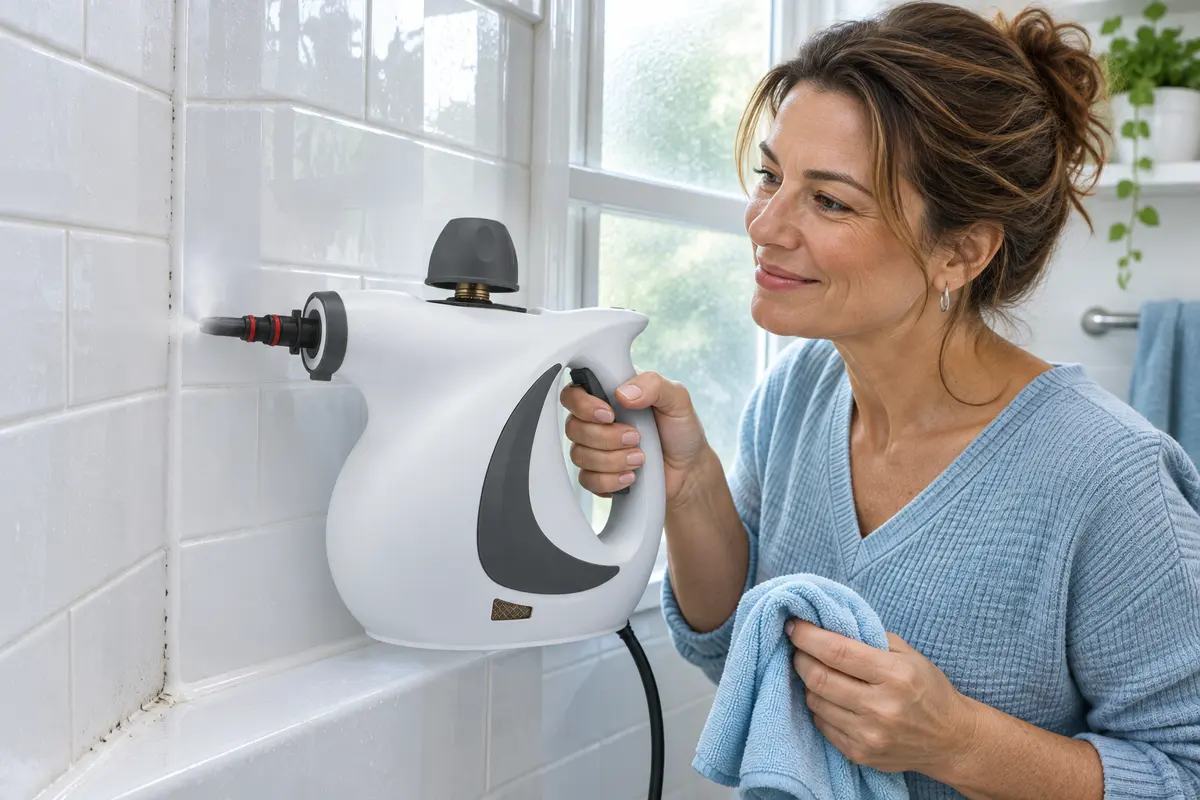
The quick answer
Yes, steam can kill and remove surface mold on hard, non-porous surfaces like tile, grout, glass and sinks, as long as you wipe the residue away and fix the moisture that caused it. It is not the answer for mold inside drywall, wood or carpet. That is Level 1. Read Level 2 for the essentials or Level 3 for the complete picture with EPA guidance. The tool we use for the hard surfaces is the Qinux Vapoxis.
“Does steam kill mold?” sounds like a yes-or-no question, and most answers online treat it that way. The honest answer depends on where the mold is and what you do after you steam. So instead of one answer, here are three: a sentence, a paragraph and the full explanation with sources. Read until you have what you need and stop there; each level is complete on its own.
Level 1: the one-sentence answer
Steam kills and loosens mold on hard, sealed surfaces like tile, grout and glass; wipe it away afterward, and for mold inside soft or porous materials, call a professional.
Level 2: the one-paragraph answer
Mold is a living organism, and sustained moist heat damages it, which is why steam works well on the visible mildew in showers, on window frames and around sinks. A handheld steamer sends hot vapor into grout lines and corners that brushes struggle to reach, and it does it with tap water only, so you are not breathing cleaner fumes in a small bathroom. Two rules make the difference. First, remove what you loosen: wipe with a microfiber cloth, because dead mold can still irritate. Second, fix the moisture: run the fan, squeegee the walls and keep humidity down, or the spots return. The maker of the Vapoxis says its steam eliminates up to 99.9% of bacteria and helps tackle mold on treated surfaces, which makes it a natural fit for the weekly shower routine.
Level 3: the complete answer
What mold is, and why it shows up where it does
Mold is a fungus that grows from microscopic spores present in almost every indoor and outdoor environment. The U.S. Environmental Protection Agency (EPA) is clear about it: there is no practical way to eliminate all mold spores indoors; the way to control mold growth is to control moisture. Spores only grow into the black or green spots you see where they find water, warmth and something to feed on. In a bathroom that means grout, silicone caulk, the bottom of shower glass and window sills, all of which stay damp and collect soap film and skin oils.
How steam works on mold
A steam cleaner heats water past boiling and pushes it out as vapor. At the surface, that vapor does three things at once: it delivers heat that damages living cells, it adds moisture and force that loosen the grime mold grows in, and it gets into tight spaces such as grout joints and caulk edges. The heat works best when the nozzle is close and you move slowly, giving each area a few seconds instead of a quick pass. The loosened material then needs to come off the surface, which is the job of a cloth or a brush attachment. Our explainer on how a steam cleaner works covers the heat-pressure-water basics.
Why “killing” is only half the job
The EPA points out that it is not enough to kill mold; it must also be removed, because dead mold can still cause allergic reactions in some people. That is why the right routine is steam, then wipe, then dry. It is also why spraying something on mold and walking away is not the full answer, whatever product you use.
Porous vs. non-porous: where steam fits
| Surface | Type | Steam? | What to do |
|---|---|---|---|
| Glazed tile, glass, porcelain, sinks | Non-porous | Yes | Steam slowly, wipe, dry, ventilate |
| Sealed grout, silicone caulk (surface spots) | Mostly non-porous | Yes | Jet nozzle, brush, wipe; replace caulk if stained deep inside |
| Painted drywall, wallpaper, ceiling tiles | Porous | No | EPA: porous materials with mold may need replacing |
| Carpet and padding after a leak | Porous | No | EPA: dry wet materials within 24–48 hours; moldy padding usually needs replacing |
| Inside walls, HVAC ducts | Hidden | No | Call a professional |
Size matters: the 10-square-foot rule
The EPA’s guidance for homes says that if the moldy area is less than about 10 square feet (roughly a 3 ft by 3 ft patch), in most cases you can handle it yourself. Bigger areas, mold after flooding with contaminated water, mold in the heating and cooling system, or anyone in the home with health concerns are the cases for a professional. Basic safety for any mold cleanup, from the EPA and CDC: ventilate the room, wear gloves and eye protection, and never mix bleach with ammonia or other cleaners.
The moisture side of the equation
Steam handles today’s spots; moisture control prevents next month’s. The EPA recommends keeping indoor relative humidity below 60%, ideally between 30% and 50%. In practice: run the exhaust fan during showers and for a while after, squeegee glass and tile, hang towels to dry outside the shower and fix drips quickly. If a smell lingers after cleaning, our guide to why a bathroom still smells after you clean it lists the hidden spots, and the pink slime in your shower article covers the bacterium people often confuse with mold.
A simple weekly routine
- Ventilate first. Fan on, door or window open.
- Steam the grout and caulk lines slowly. Hold the jet nozzle close and give each section a few seconds.
- Wipe immediately. A microfiber cloth lifts the loosened residue; rinse it often.
- Dry the area. Squeegee or towel-dry so the surface does not stay wet.
- Repeat weekly. Small, regular passes stop spots before they set into the grout.
Which level answers your question?
| If you want to know… | Read |
|---|---|
| Will steam handle the mildew in my shower? | Level 1 |
| How to use steam on mold properly | Level 2 |
| Porous surfaces, the 10 sq ft rule, moisture and when to call a pro | Level 3 |
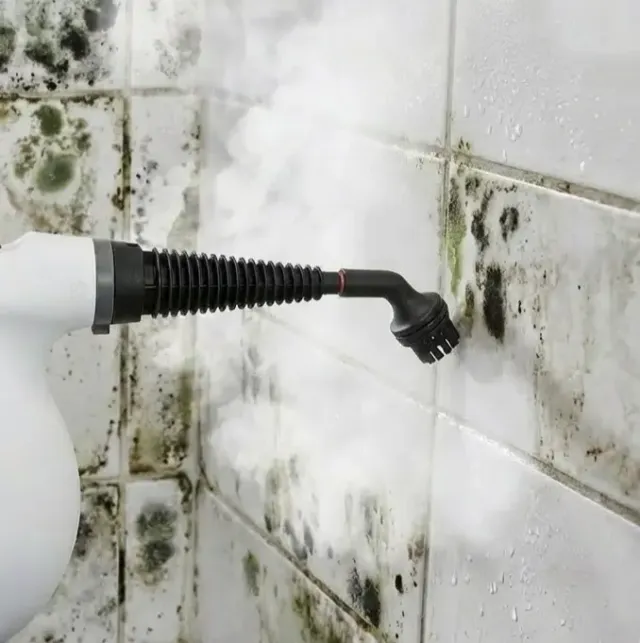
Our recommendation: Qinux Vapoxis
For the place where most household mold actually shows up, the tile, grout and caulk of a bathroom, the Qinux Vapoxis is the tool we recommend. It is a handheld steam cleaner that works with nothing but tap water, so you can clean a small, closed shower without fumes, and its jet nozzle and brushes put the steam right into grout lines and corners. It fits the routine above exactly: steam, wipe, dry, repeat every week.
- Just water, no chemicals — no fumes in a small bathroom, nothing to rinse off.
- Hygienic clean — the maker states its steam eliminates up to 99.9% of bacteria and helps tackle mold on treated surfaces.
- Attachments for grout and corners — jet nozzle, round brush and tools for glass and flat surfaces.
- Light and handheld — easy to aim at the top rows of tile and the caulk line.
- One tool for the whole home — kitchen grease, sinks, windows, upholstery and car seats too.
Customers rate it 4.8/5 on the official site, and 94% say they would recommend it. A single unit is $109, two are $198, with free shipping, a launch discount of up to 50% and a 14-day money-back guarantee. Sold only through the official website.
Want the full picture first? Our complete Vapoxis review covers results room by room, and the Vapoxis home page has the current prices. Always test a hidden spot first, follow the steamer’s instructions and call a professional for large or hidden mold problems.
Frequently asked questions
Does steam kill mold?
Steam can kill and remove mold growing on the surface of hard, non-porous materials such as glazed tile, glass, sealed grout and sinks, especially when you follow it by wiping the residue away. It cannot reach mold that has grown deep inside porous materials like drywall, ceiling tiles or carpet padding, and it does not fix the moisture problem that let the mold grow.
Is steam better than bleach for mold?
On hard surfaces, steam cleans with water only, so there are no fumes in a small bathroom and nothing to rinse off. The EPA notes that killing mold is not enough, because dead mold can still cause allergic reactions; it must be removed. That is why steam followed by a wipe works well on tile and grout. Never mix bleach with ammonia or other cleaners.
Can you steam clean mold on drywall or wood?
Not as a fix. Painted drywall, wallpaper and raw wood absorb water, and steam can push moisture into them. The EPA advises that porous materials with mold may need to be thrown away and replaced. For more than about 10 square feet of mold, or mold inside walls, contact a professional.
Why does mold keep coming back in my shower?
Because the conditions that feed it are still there: moisture, warmth and soap film. Run the exhaust fan during and after showers, squeegee the walls, keep indoor humidity below 60% (ideally 30 to 50%, says the EPA) and steam the grout lines regularly before spots become visible.
When should I call a professional for mold?
The EPA says most people can handle a moldy area smaller than about 10 square feet (roughly 3 by 3 feet). Call a professional for larger areas, mold after flooding or sewage, mold in the heating and cooling system, or if anyone in the home has health concerns about mold exposure.