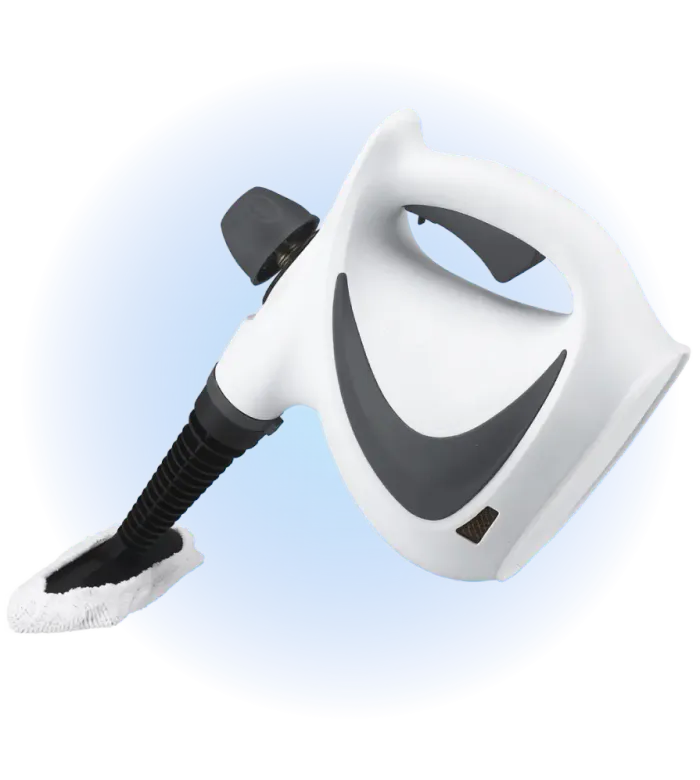
The quick answer
A steam cleaner works by boiling a small amount of tap water into hot vapor and releasing it through a nozzle under pressure. The heat softens grease, soap scum and sticky grime so it lets go of the surface, the pressure drives it out of grout lines and corners, and because steam is mostly vapor, surfaces end up only slightly damp. No chemicals needed. A handheld steamer like the Qinux Vapoxis puts that power in one hand.
The first time you watch a jet of steam lift years of grease off a range hood, it looks a bit like magic. It is not. It is physics you use every day without noticing: a hot pan releases food more easily than a cold one, butter melts in a warm kitchen, a hot shower loosens grime on your skin. A steam cleaner simply concentrates that heat and points it exactly where you need it. Knowing how it works also makes you much better at using one, so let’s break it down.
Step 1: water becomes steam
Inside a handheld steam cleaner there is a small water tank and a heating element, sometimes called the boiler. When you switch it on, the element heats the water. At sea level water boils at 212°F (100°C); once it reaches that point, it starts to turn into steam.
Here is the key part: when water turns into vapor, it expands enormously. That vapor needs somewhere to go, so pressure builds up inside the sealed chamber. That stored pressure is what you release when you press the trigger.
Prefer to learn by doing? Our how to use a steam cleaner weekend plan takes you room by room, with the right attachment for each job.
Step 2: pressure pushes the steam out
When you press the trigger, a valve opens and the pressurized steam rushes out through the nozzle. The narrow opening turns it into a focused jet. That jet does two jobs at once:
- It delivers heat precisely — the hottest steam hits a small area, right where the grime is.
- It adds a little force — enough to blast loosened dirt out of grout pores, faucet bases, window tracks and seams that a sponge cannot reach.
Attachments change how that jet behaves: a jet nozzle concentrates it for corners and grout, a brush head adds scrubbing action, an angled nozzle reaches behind taps, and a squeegee or cloth cover spreads it over glass and larger surfaces.
Step 3: heat breaks the bond between dirt and surface
Most household grime is held in place by grease, oils, soap residue or dried sugars. These stick hard when they are cold. Heat changes that:
| Type of grime | What heat does to it | Typical spot |
|---|---|---|
| Kitchen grease | Softens and melts it so it wipes off | Range hood, backsplash, stovetop |
| Soap scum and body oils | Loosens the film from tile and glass | Shower walls, doors, tub edges |
| Sticky spills and dried food | Rehydrates and softens them | Counters, appliance handles, car cup holders |
| Grime in grout and seams | Heat plus pressure lifts it out of the pores | Floor and shower grout, window tracks |
Once the bond is broken, the dirt is just sitting on the surface. A quick wipe with a microfiber cloth carries it away. That is why the steam-then-wipe rhythm is the heart of steam cleaning.
Step 4: the hygiene part
High heat has been used to sanitize things for a very long time; think of boiling water or a dishwasher’s hot rinse. Steam brings that heat to surfaces you cannot put in a dishwasher. The maker of the Vapoxis states that its steam eliminates up to 99.9% of bacteria on treated surfaces. To get the most from it, move slowly: a moment of contact does more than a quick wave.
It is also why steam pairs so well with bathroom problems like the film we cover in what is the pink slime in your shower: you clean and freshen in one step, with no fumes in a small room.
Step 5: why things barely get wet
People often expect steam to soak a sofa or a mattress. It does not, because steam is water in a very spread-out form. A handheld unit uses a small amount of water per minute, released as fine vapor, and much of it evaporates again within minutes. That “low-moisture” quality is what makes steam suitable for mattresses, upholstery and car seats, where a wet sponge would cause trouble.
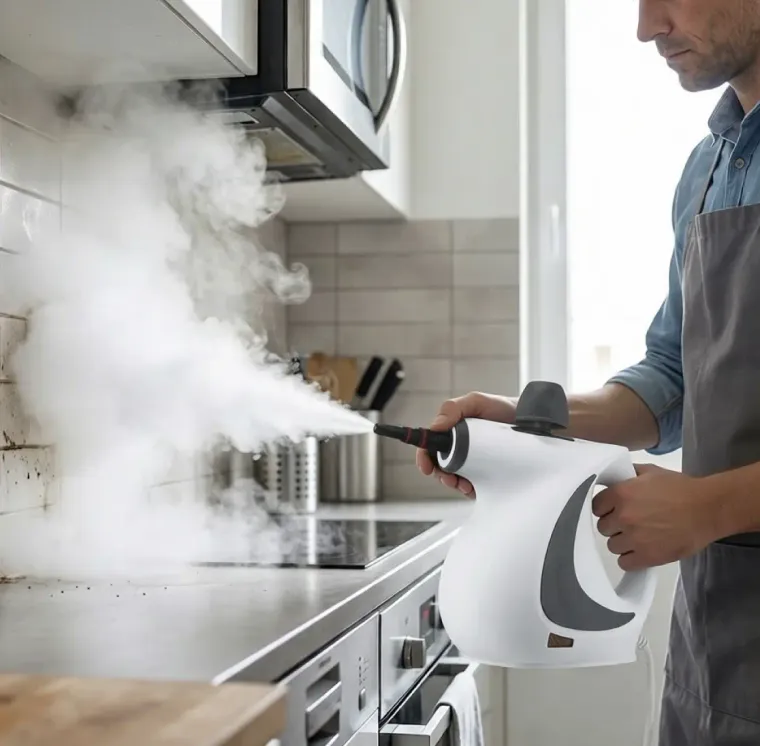
Turning the science into better results
Now that you know what is happening, these habits make sense on their own:
- Let it heat fullyWait for a steady jet. Steam from a half-heated unit is wetter and cooler, and cleans less well. (Spitting or weak steam? See 8 common steam cleaner problems and the fix for each.)
- Work slowly, close upHeat drops quickly with distance. Keep the nozzle close and move slowly so the steam has time to soften the grime.
- Steam, then wipe immediatelyWipe while the grime is still warm and soft. Let it cool and it starts to stick again.
- Match the attachment to the jobJet for grout and corners, brush for textured tile, squeegee for glass, cloth for larger flat areas.
- Work top to bottomLoosened dirt runs down, so finish at the lowest point.
- Mind the surfaceHeat is the tool, so keep it away from things heat can harm. Our guide to what you can steam clean has the full list.
Curious about the common misconceptions? Our steam cleaning myths vs. facts clears up nine of them, and if you are choosing between tools, see handheld steam cleaner vs. steam mop.
Our recommendation: Qinux Vapoxis
If you like the idea of cleaning with heat and plain water instead of a cabinet full of sprays, the Qinux Vapoxis is the handheld steamer we recommend. It is built around exactly the mechanism above, in a compact unit that is easy to grab for a five-minute job:
- Just tap water, no chemicals — heat does the work, so there are no fumes and no residue left behind.
- Hygienic clean — the maker states its steam eliminates up to 99.9% of bacteria on treated surfaces.
- The right attachment for every job — jet and angled nozzles for grout and corners, brush heads for tile, a squeegee for glass and windows.
- Handheld and light — heats up in minutes and goes where a steam mop cannot: backsplashes, range hoods, car interiors, mattresses.
- One tool for the whole house — kitchen, bathroom, upholstery, windows and the car.
Customers rate it 4.8/5 on the official site, and 94% say they would recommend it. A single unit is $109, and bundle pricing drops to $79 per unit in the 5-pack (the 2-pack at $99 each is the most popular). Free shipping, a launch discount of up to 50% and a 14-day money-back guarantee. Sold only through the official website.
Want the full picture first? Our complete Vapoxis review covers room-by-room results, what is in the box and the scorecard, and the home page has a short overview with current prices. Always follow the maker’s instructions for the steamer and for the surface you are cleaning, and keep the hot unit away from children and pets while you work.
Frequently asked questions
How does a steam cleaner clean without soap?
It uses heat instead of chemistry. Hot steam softens and melts greasy, sticky residue so it loosens from the surface, and the pressure of the jet helps push it out of pores and corners. You then simply wipe the loosened dirt away with a cloth.
Does steam actually sanitize?
High heat is one of the oldest ways to reduce germs on hard surfaces. The maker of the Qinux Vapoxis states that its steam eliminates up to 99.9% of bacteria on treated surfaces. For best results, move slowly so the steam has a moment of contact, and follow the instructions for each surface.
Why does a steam cleaner leave surfaces only slightly damp?
Steam is water in vapor form, so a little goes a long way. A handheld steamer uses a small amount of water spread out as a fine, hot vapor, and much of it evaporates again quickly. That is why steam suits upholstery and mattresses better than a bucket and sponge.
How long does a handheld steam cleaner take to heat up?
Handheld steamers heat up in a few minutes. The water has to reach boiling point before steam forms; once you see a steady jet, you are ready to clean. Check the manual for your model’s exact heat-up time.
Should I use distilled or tap water in a steam cleaner?
Follow the manual for your steamer. In general, hard tap water leaves mineral scale inside any appliance that boils water, so if your water is very hard, many people use filtered or distilled water, or descale the unit as the maker recommends.
What can’t you clean with steam?
Avoid surfaces that heat or moisture can damage: unsealed wood and unsealed stone, some laminates, delicate fabrics such as silk, cold glass in freezing weather, and electronics. Our list of what you can steam clean covers 15 surfaces that love steam and 6 to avoid.