The quick answer
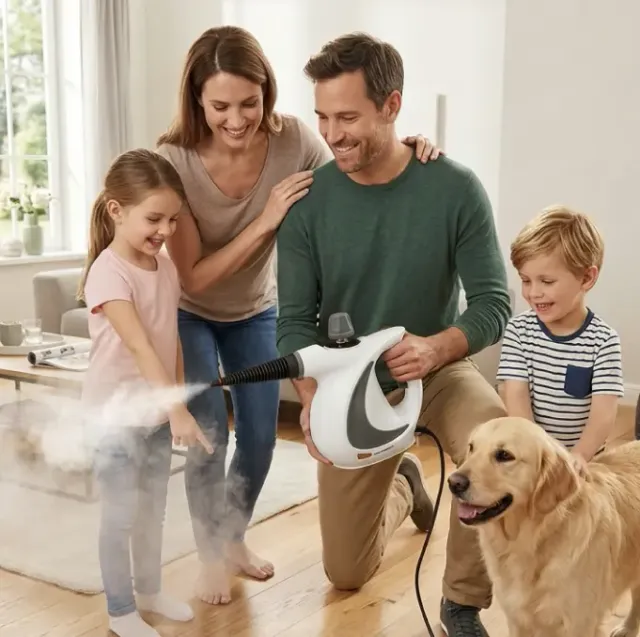
Blot immediately, flood with cold water, blot again, then soak the whole area with an enzyme cleaner and let it dry. Do not rub, do not use hot water or steam on the fresh stain, and never use bleach. Once the spot is clean and dry, sanitize the surroundings where the smell lingers and the dog returns: tile, grout, hard floors, baseboards, crate trays and pet bedding. That part is where a chemical-free handheld steamer like the Qinux Vapoxis does its best work, with nothing but tap water around your pet.
You walk into the living room and there it is: a dark patch on the carpet, still wet, and a dog who suddenly finds the ceiling very interesting. What you do in the next ten minutes decides whether this is a small cleanup or a permanent smell that your dog keeps coming back to. Here is the sequence that works, the mistakes that make it worse, and the sanitizing step most people skip.
The first 10 minutes, step by step
- Minute 0–2: blot hardLay a thick stack of paper towels or an old towel over the spot and press with your full weight (stand on it). Replace and repeat until the towels come up nearly dry. This single step removes most of the problem.
- Minute 2–4: rinse with cold waterPour a small amount of cold water over the spot to dilute what is left in the fibers, then blot again the same way. Cold, never warm.
- Minute 4–6: apply an enzyme cleanerEnzyme (bio) cleaners break down the uric acid crystals that cause the lasting smell. Apply enough to reach as deep as the urine went, which is deeper than it looks. Treat an area about 50% larger than the visible stain.
- Minute 6–10: wait, do not scrubFollow the product’s dwell time (often 10–15 minutes or more). Cover the spot with a damp cloth so it does not dry too fast. Then blot out the excess.
- Afterwards: let it dry fullyA fan pointed at the spot speeds this up. Keep the dog away until it is dry; a damp spot smells interesting.
- The smell testOnce dry, get your nose close. Any trace of odor means a second enzyme treatment. A fluorescent UV flashlight shows old urine spots you cannot see.
What NOT to do (these make it permanent)
- Do not rub. Rubbing pushes urine deeper and spreads it sideways into clean fibers.
- Do not use hot water or steam on the fresh stain. Heat sets the proteins and locks the smell into the fibers. This is the most common mistake, and the one that turns a cleanable accident into a lifelong odor. Steam comes later, and for other surfaces (see below).
- Do not use bleach. Urine contains ammonia; bleach plus ammonia makes toxic fumes, and bleach ruins carpet color.
- Do not use scented sprays or carpet powders to cover the smell. Your dog can still smell the urine underneath, and now the room smells of two things.
- Do not treat only the visible stain. The wet area in the pad underneath is always bigger.
- Do not punish the dog after the fact. It does not connect the two events; it only learns to hide the next accident. Repeat accidents in a house-trained dog are worth a call to the vet.
Why the spot keeps attracting your dog
Dogs mark where they smell urine, and their noses detect traces far below what we notice. After an accident, residue is rarely only in the carpet. It splashes onto the baseboard, runs along tile or hardwood at the edge of the rug, soaks into grout lines, and lingers on the crate tray or the pet bed the dog uses afterwards. If you clean the carpet perfectly and leave those, the room still smells like a bathroom to your dog.
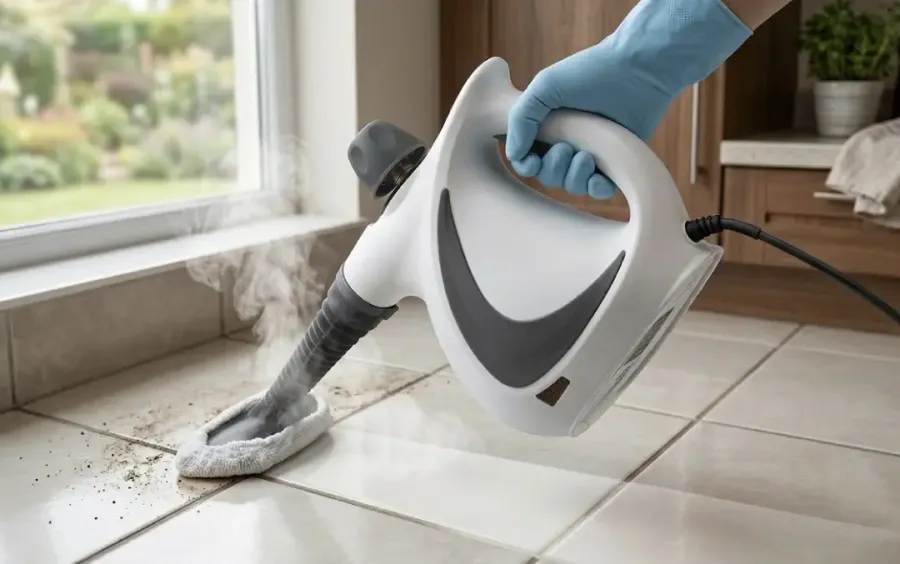
Those surrounding surfaces are hard and non-absorbent, which means heat is not a problem there; it is an advantage. Hot steam lifts dried residue out of grout and off tile, hard floors and plastic trays without scrubbing, and because it uses only water, nothing chemical is left on the surfaces your dog sniffs, licks and sleeps on. This is where a handheld steamer like the Qinux Vapoxis fits into pet cleanup: not on the fresh stain, but on everything around it.
Surface by surface: what to do
| Where the accident is | First response | Sanitize afterwards with |
|---|---|---|
| Carpet or rug | Blot, cold rinse, enzyme cleaner, dry | Second enzyme pass if any smell remains; no heat on the fibers |
| Tile, vinyl or sealed hard floor | Wipe up, mop with cold water | Steam the area and the grout lines, wipe dry |
| Grout lines and corners | Blot, rinse | Jet nozzle steam, then wipe; residue hides here |
| Baseboards and door frames | Wipe with cold water | Steam and wipe; splash marks are common at dog height |
| Crate tray, litter area, feeding mat | Rinse | Steam, no detergent needed |
| Washable pet bed cover | Wash on the care-label setting | Steam the bed base or foam surface, let it dry fully |
| Hardwood (unsealed or worn) | Wipe immediately, dry | Check the finish first; steam only well-sealed wood, briefly |
If your dog’s accidents happen in the bathroom or near the toilet, the hidden sources we cover in why your bathroom still smells after cleaning apply too: urine at the base of the toilet and in grout is the classic one.
A simple prevention routine
- Weekly: steam the hard floors and grout where your dog spends time, and the crate tray. Ten minutes, no chemicals.
- After every accident: the 10-minute carpet routine above, plus a quick steam of the hard surfaces around it.
- Monthly: a UV flashlight sweep in the evening to catch spots you missed, and a steam pass over pet beds and feeding areas.
- Always: if a house-trained dog suddenly has accidents, talk to your vet before you assume it is a behavior problem.
Our recommendation: Qinux Vapoxis
For a home with pets, the Qinux Vapoxis is the cleaning tool we recommend. It solves the part of pet accidents that enzyme cleaners cannot: sanitizing the tile, grout, hard floors, baseboards, crate trays and pet beds where urine residue lingers and keeps calling your dog back, and it does it with hot steam from plain tap water, so nothing is left behind on the surfaces your dog licks and sleeps on. It is the most practical way to keep a pet home genuinely clean, not just sprayed over.
- Just tap water — no detergents, no chemical residue, no fumes around pets and kids.
- Hygienic clean — the maker states its steam eliminates up to 99.9% of bacteria on treated surfaces.
- Gets into grout and corners — the jet nozzle pushes residue out of porous lines where smells hide.
- Attachments for every surface — brushes for tile and trays, a squeegee for glass, angled nozzles for baseboards and corners.
- Handheld and quick to heat — a ten-minute pass after an accident, not an afternoon of scrubbing.
Customers rate it 4.8/5 on the official site, and 94% say they would recommend it. A single unit is $109, and bundle pricing drops to $79 per unit in the 5-pack (the 2-pack at $99 each is the most popular). Free shipping, a launch discount of up to 50% and a 14-day money-back guarantee. Sold only through the official website.
Want the full picture first? Our complete Vapoxis review covers room-by-room results and what is in the box, the home page has a short overview with current prices, and what can you steam clean lists which surfaces take steam and which do not. Always follow the maker’s instructions for the steamer and for the surface you are cleaning.
Frequently asked questions
What is the first thing to do when a dog pees on the carpet?
Blot. Press a thick wad of paper towels or a clean towel onto the wet spot and stand on it to pull up as much liquid as possible. Do not rub and do not reach for a cleaner yet; the more urine you lift in the first two minutes, the less there is to stain and smell.
Can I use a steam cleaner on dog urine?
Not on the fresh accident. Heat bonds the proteins in urine to carpet fibers and can lock the smell in permanently. First blot, rinse with cold water and treat with an enzyme cleaner, and let it dry completely. Steam is for afterwards, and for the hard surfaces around the accident: tile, grout, baseboards, hard floors, crate trays and washable pet beds, where it sanitizes without chemicals.
Why does my dog keep peeing in the same spot?
Dogs return to places that smell like urine, even at levels you cannot detect. If any odor is left in the fibers, the pad or the floor underneath, the spot reads as a bathroom. Thorough enzyme treatment of the whole wet area (which is usually bigger than the visible stain) and a chemical-free clean of the surrounding hard surfaces are what break the cycle.
Does vinegar remove dog urine smell?
A diluted white vinegar solution helps neutralize the ammonia smell and is a reasonable rinse after blotting. On its own it does not break down the uric acid crystals that cause the long-term odor; an enzyme cleaner does. Many people use vinegar first, then enzymes.
Should I use bleach on pet urine?
No. Urine contains ammonia, and bleach plus ammonia releases toxic fumes. Bleach also damages carpet dyes. Keep bleach away from pet accidents entirely.
How do I know if the urine soaked into the carpet pad?
If the wet area was larger than a saucer, assume it did. Press on the spot after blotting: if more moisture comes up from below, the pad is wet. Soak the area with enzyme cleaner so it reaches as deep as the urine did, and give it time to work before blotting it out.