The quick answer
You can clean a couch without renting a big steam cleaner: check the cleaning code on the tag, vacuum thoroughly, treat spots with the method the code allows, and let it dry with good airflow. The couches that stay clean, though, rely on three pillars working together: the right tool (a vacuum plus, on water-safe fabric, a small handheld steamer), a few weekly habits and a living room set up to protect the sofa. For the tool pillar, a compact steamer like the Qinux Vapoxis refreshes cushions with tap water, no rental and no harsh sprays.
Searches for “how to clean a couch without a steam cleaner” usually come from the same moment: there is a stain, a smell or simply a grey film on the cushions, and nobody wants to drive to the hardware store, haul home a heavy rental machine and leave the sofa wet for a day. The good news is that you do not need one. The less obvious news is that no single trick keeps a couch clean. Baking soda, a vinegar spray or a one-time deep clean all help for a week. What works long term is a system with three parts.
Step zero: read the cleaning code
Before any method, lift a cushion or look under the frame for the care tag. Upholstery makers use a simple code:
| Code | What it means | Safe methods |
|---|---|---|
| W | Water-based cleaning is safe | Mild soap solution, light steam after a spot test |
| S | Solvent only, no water | Dry cleaning solvent or a professional; no steam |
| W/S | Either water or solvent | Most methods, after a spot test |
| X | No liquids at all | Vacuum and brush only |
No tag? Treat the fabric as delicate and test on a hidden spot (the back or underside) before anything else.
Why one-off cleaning never lasts
A couch collects dust, skin cells, body oils, pet hair, crumbs and the occasional spill. Body oil is the hidden one: it builds up on armrests and headrests and attracts dirt, which is why those spots turn grey first. A single deep clean removes the layer, but if nothing changes about how the couch is used and protected, the same layer comes back in weeks. That is where the three pillars come in.
Pillar 1: the tool (what it does and what it doesn’t)
The vacuum is the base of every couch routine. Use the upholstery tool across the cushions, the crevice tool along the seams and under the cushions, where crumbs and grit wear fabric from the inside.
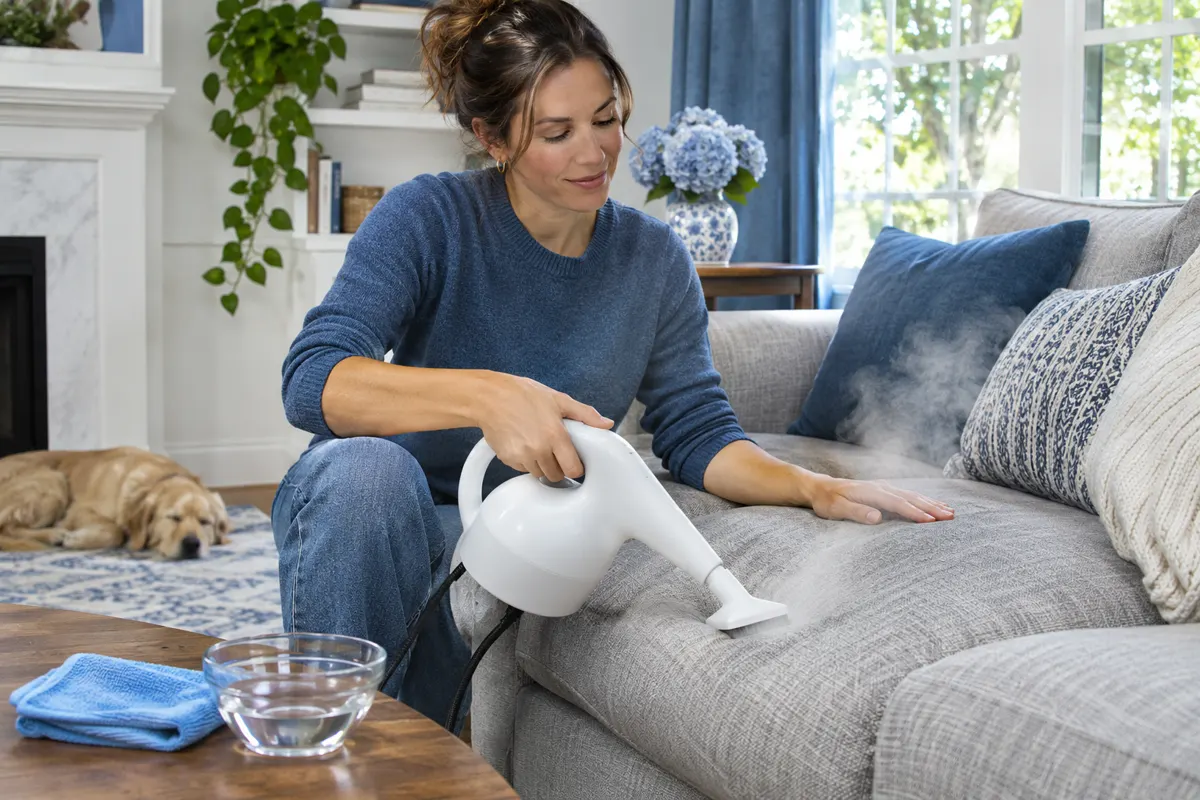
A handheld steamer is the step up on W and W/S fabric. Instead of soaking the cushion like a rental extractor, it uses a light pass of hot steam to loosen grime and freshen the fibers, then you wipe or blot with a microfiber cloth. It dries much faster because it adds far less water. What it does not do: it will not erase every old set-in stain, and it is not for X or S fabric, leather or velvet.
For spots: blot (never rub) with a cloth and a mild solution that fits the code; use baking soda for odors on any fabric that allows it. Our guide to what you can steam clean lists which fabrics take steam well.
Pillar 2: the habits
- Vacuum weekly. Five minutes keeps grit from grinding into the weave.
- Blot spills immediately. The first two minutes decide whether a spill becomes a stain.
- Flip and rotate cushions. It spreads wear and sun exposure evenly.
- Refresh the high-contact spots monthly. Armrests and headrests need a quick wipe or steam pass more often than the rest.
- Deep refresh every few months. A full steam pass on water-safe fabric, then let it dry with a window open or a fan on.
Pillar 3: the room
- Washable throws on the spots where people (and pets) actually sit. A throw goes in the washer; a cushion does not.
- A pet blanket or bed nearby so the dog has a better option than the corner seat.
- A side table within reach, so drinks are not balanced on armrests.
- Sun control. Direct sun fades fabric; curtains or a slight move of the sofa help.
- Airflow. A room that is ventilated lets cushions dry quickly after cleaning and keeps musty smells away.
The 3 pillars at a glance
| Pillar | What to do | Why it matters |
|---|---|---|
| Tool | Vacuum + handheld steamer on W or W/S fabric + blotting cloths | Removes grime without soaking the cushion |
| Habits | Weekly vacuum, blot spills, rotate cushions, monthly armrest refresh | Stops the dirt layer from building up again |
| Room | Throws, pet bed, side table, sun control, airflow | Keeps the dirt off the couch in the first place |
How to refresh a couch in 30 minutes
- Check the code and testTry your method on a hidden spot and let it dry.
- Vacuum everythingCushions, seams, under the cushions, the frame and the floor beneath.
- Pre-treat spotsBlot with a cloth and a solution that fits the code.
- Steam in light passesOn water-safe fabric, keep the steamer moving and work in small sections.
- Wipe and blotLift loosened grime with a clean microfiber cloth.
- Dry with airflowOpen a window or run a fan; keep people and pets off until it is dry.
Pet accident on the sofa or the rug? See what to do in the first 10 minutes. Still deciding between a rental machine and your own handheld tool? Our rent or buy verdict breaks down the cost.
Our recommendation: Qinux Vapoxis
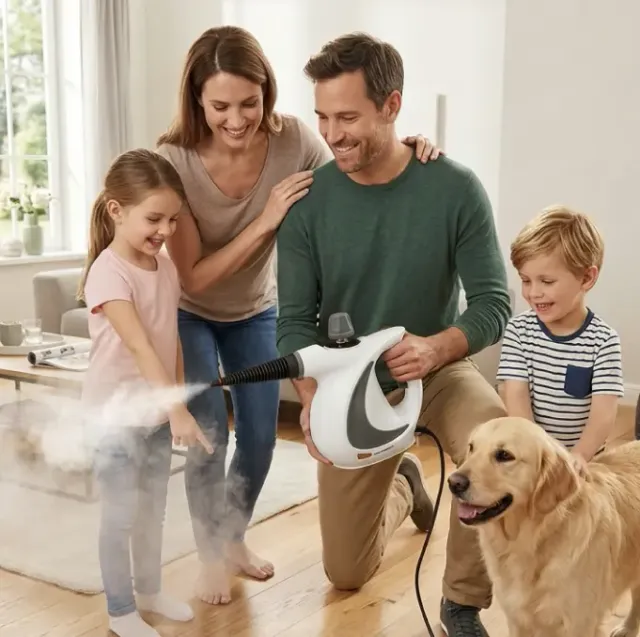
For the tool pillar, the Qinux Vapoxis is the steamer we recommend. It is exactly what most people mean when they want to clean a couch without a steam cleaner: no bulky rental, no tank of soapy water, no cushion that stays wet until tomorrow. It is a compact handheld steamer that heats tap water in minutes, so you can refresh armrests on a weeknight and do a full deep pass on a Saturday morning, then use the same tool on the mattress, the car seats and the bathroom.
- Just tap water — no sprays and no chemical smell where you sit and relax.
- Hygienic clean — the maker states its steam eliminates up to 99.9% of bacteria on treated surfaces.
- Brush attachments — for upholstery, seams and armrests, plus a nozzle for corners.
- Small and light — stores in a drawer, ready for the next spill.
- One tool for the whole home — the same steamer handles grout, grease, mattresses and car interiors.
Customers rate it 4.8/5 on the official site, and 94% say they would recommend it. A single unit is $109, with free shipping, a launch discount of up to 50% and a 14-day money-back guarantee. Sold only through the official website.
Want the full picture first? Our complete Vapoxis review covers room-by-room results and what is in the box, and the Vapoxis home page has a short overview with current prices. Always check your couch’s cleaning code, test a hidden spot first and follow the steamer’s instructions.
Frequently asked questions
How do you clean a couch without a steam cleaner?
Check the cleaning code on the tag first. Then vacuum thoroughly with the upholstery tool, treat spots according to the code (a mild water-based solution for W or W/S fabric, a dry or solvent method for S, vacuum only for X), blot rather than rub, and let the cushion dry with good airflow. A small handheld steamer is an easy middle ground between hand cleaning and renting a big carpet machine on fabrics that allow water.
What do the cleaning codes W, S, W/S and X mean on a couch?
W means water-based cleaners are safe; S means solvent-based cleaning only, no water; W/S means either is fine; X means vacuum or brush only, with no liquid cleaners. If there is no tag, treat the couch as delicate and test any method on a hidden spot first.
Can I use baking soda to clean my couch?
Yes, baking soda is a popular dry way to freshen fabric. Sprinkle a thin layer, let it sit for 20 to 30 minutes (longer for odors) and vacuum it up thoroughly. It helps with smells but will not remove set-in stains.
How often should you clean a fabric couch?
A quick vacuum once a week, spot-cleaning spills right away and a deeper refresh every few months is a good rhythm for most homes. Homes with pets, kids or allergies benefit from more frequent vacuuming and washing of throws and covers.
Is steam safe on all couches?
No. Steam adds heat and moisture, so it suits fabrics marked W or W/S and only after a hidden-spot test. Avoid steam on X and S-coded fabric, leather, velvet or anything the manufacturer says not to wet. Keep the steamer moving and do not soak the cushion.