The quick answer
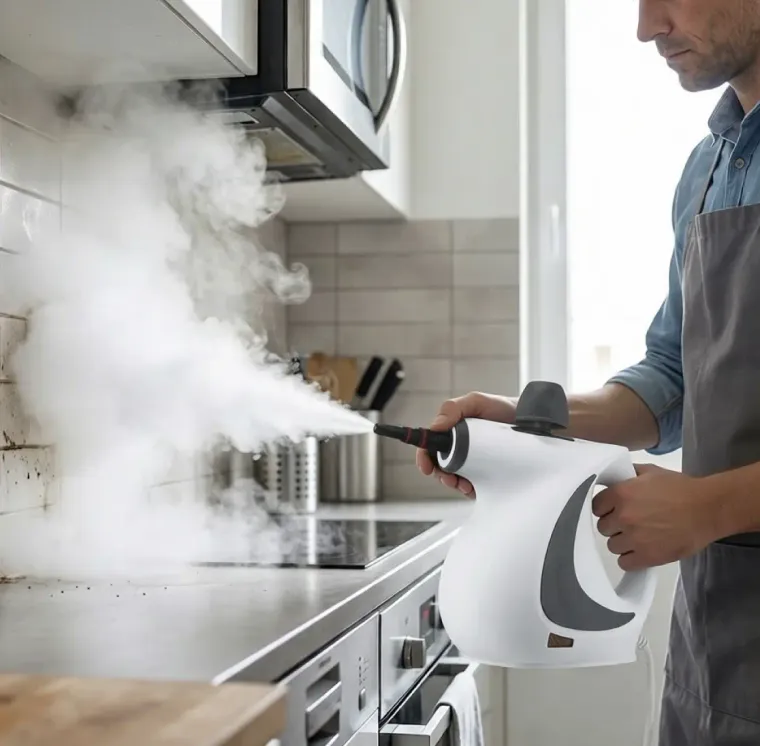
Kitchen grease is just cooked oil that cooled, collected dust and hardened. Heat softens it, so hot steam or hot soapy water does most of the work for you. Steam the hood exterior, stovetop, grates and tile backsplash, soak removable filters in hot water with dish soap and baking soda, and wipe wood or painted cabinets gently with warm soapy water. No harsh degreasers needed.
Every time you cook, tiny droplets of oil float up and settle on everything around the stove. On day one, they wipe right off. A few weeks later, they have mixed with dust and turned into that tacky, yellowish film that seems to laugh at your sponge. The usual answer is a bottle of strong degreaser and a lot of elbow grease. There is an easier way, and it starts with understanding why grease sticks. (For the rest of the house, see our overview of alternatives to harsh chemical cleaners.)
Why kitchen grease gets so stubborn
Liquid oil is easy to wipe. The problem is what happens next: as it cools, it thickens; as it sits, it collects dust and cooking residue; and every new layer of heat bakes it a little harder. That is why old grease feels sticky or even crusty. The trick is to reverse the process with heat: warm grease softens and loosens its grip, and a microfiber cloth can then lift it off instead of smearing it around.
What you need
- A handheld steam cleaner with a brush attachment and a microfiber cover (we use the Qinux Vapoxis).
- Two or three microfiber cloths — one to wipe, one to dry.
- Dish soap and baking soda for soaking removable parts.
- A soft brush or old toothbrush for corners and grate edges.
Area by area: the chemical-free method
1. Range hood (outside)
- Turn it off and let it coolMake sure the fan and light are off and the stove below is cold.
- Steam in small sectionsUse the brush or cloth-covered tool, keep the steam moving and work from top to bottom.
- Wipe immediatelyFollow the steam with a microfiber cloth while the grease is still soft, then buff dry so stainless steel stays streak-free.
Keep steam away from the lights, the control buttons and any electrical parts.
2. Hood filters and burner grates
Removable metal parts are the easiest of all. Fill the sink with the hottest water your hands can safely handle, add a few drops of dish soap and a generous sprinkle of baking soda, and let filters and grates soak for 15–30 minutes. Brush gently along the mesh or grate edges, rinse and dry. For baked-on spots that remain on grates, a short blast of steam with the jet nozzle softens them so they brush off. Always check your appliance manual first, especially for filters with special coatings.
3. Stovetop
On a cold stovetop, steam the surface and around the burners with the brush attachment, then wipe. Steam is especially good at the greasy ring around knobs and burner bases, where a sponge cannot reach. For glass-ceramic cooktops, use a cloth cover rather than a brush, and follow the manufacturer’s cleaning instructions. Keep steam away from knobs and controls on electric and induction models.
4. Tile backsplash
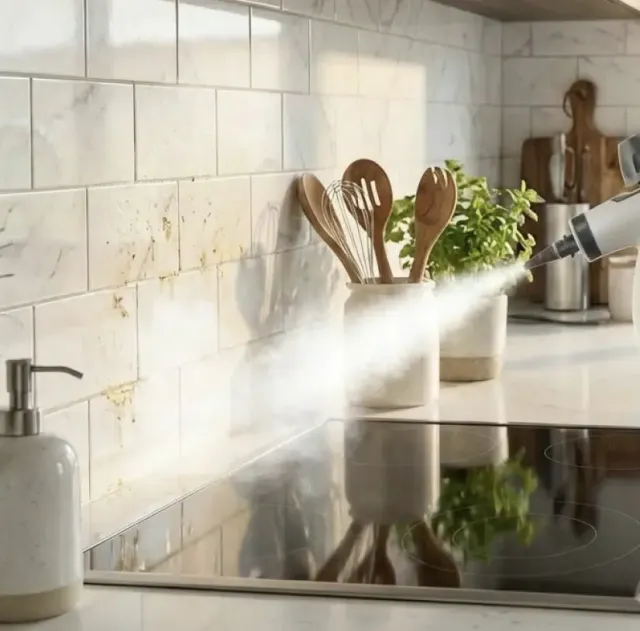
Ceramic and porcelain tile handle steam beautifully. Work in small squares, let the steam loosen the film on the tile and in the grout lines, then wipe. If the grout behind your stove has gone gray, our guide on how to clean grout without scrubbing walks through it step by step. Cooking for a crowd soon? Our holiday deep cleaning checklist puts the stovetop and hood on a two-week plan.
5. Cabinets and other sensitive surfaces
Wood and painted cabinets are the one place to go gently. Heat and moisture can damage finishes, so wipe them with warm water and a little dish soap, then dry right away. If you want to use steam near them, wrap a microfiber cloth around the attachment, make one quick pass and test a hidden spot first. For the complete list of what steam loves and what it does not, see what you can (and cannot) steam clean.
Quick reference
| Area | Best method | Watch out for |
|---|---|---|
| Range hood exterior | Steam + microfiber | Lights, controls, wiring |
| Hood filters | Hot soapy soak + baking soda | Special coatings (check manual) |
| Burner grates | Soak, then steam stubborn spots | Let them dry fully |
| Stovetop | Steam on a cold surface | Knobs and electronics |
| Tile backsplash | Steam in small squares | Nothing — tile loves steam |
| Wood / painted cabinets | Warm soapy cloth | Avoid direct, prolonged steam |
How to keep grease from coming back
- Run the hood fan every time you cook, and for a few minutes after.
- Use lids on pans when frying to cut down on splatter.
- Wipe the stovetop and backsplash while they are still slightly warm (not hot) after cooking.
- Do a quick steam pass weekly — a few minutes before buildup hardens saves an hour later.
Our recommendation: Qinux Vapoxis
For this job, we recommend the Qinux Vapoxis, a compact handheld steam cleaner that runs on tap water only. It heats up in minutes, and its pressurized steam softens grease and grime so you can wipe it away. The attachment set covers the whole kitchen: jet and angled nozzles for knobs and grate edges, a round brush for stovetops and hoods, a microfiber cover for gentler surfaces and an extension hose for the top of the hood. Owners rate it 4.8/5 on the official site. Marissa said it best: “I was amazed at how well it cuts through kitchen grease. The steam does all the work.”
It does exactly what this guide is about: it reverses the process with heat, so baked-on grease on the hood, stovetop and backsplash softens and wipes away without a bottle of harsh degreaser near the food you cook. A single unit is $109, going down to $79 per unit on the 5-pack, with up to 50% off at launch, free shipping and a 14-day money-back guarantee.
Want the details first? Our full Vapoxis review covers room-by-room results, and our home page has a quick overview.
Frequently asked questions
What removes kitchen grease without chemicals?
Heat and a little friction do most of the work. Hot, pressurized steam softens sticky grease so it wipes away with a microfiber cloth, and for removable parts, a soak in hot water with a few drops of dish soap and some baking soda breaks down buildup. Wipe surfaces dry afterward.
Can you use a steam cleaner on a range hood?
Yes, on the outside of most metal range hoods. Use a brush or cloth-covered attachment, keep the steam moving and wipe as you go. Turn the hood off first, keep steam away from the lights, controls and electrical parts, and wash mesh filters separately in hot, soapy water.
How do I get sticky grease off kitchen cabinets?
Wipe them with a soft cloth dipped in warm water with a little dish soap, then dry them right away. Wood and painted cabinets do not like heat and moisture, so avoid steaming them directly. If you use steam nearby, wrap a microfiber cloth around the attachment, make one quick pass and test a hidden spot first.
How often should I degrease my kitchen?
A quick wipe of the stovetop and backsplash after cooking prevents most buildup. A deeper clean of the hood, filters and grates every few weeks, or more often if you fry a lot, keeps grease from turning into that hard, sticky layer.
Is steam cleaning safe around food?
Steam uses only water, so there is no chemical residue left on surfaces where you prepare food. Remove food, utensils and small appliances from the area first, and keep the hot unit away from children and pets while you work.