The quick answer
You can handle most home cleaning without harsh chemicals: soap and warm water for general dirt, vinegar for limescale and glass, baking soda as a gentle scrub, hydrogen peroxide for some stains, enzyme cleaners for pet and food odors, and steam for grease, grout and hard surfaces. Each has limits, and none should be mixed with bleach. For the toughest everyday jobs, steam is the alternative we recommend, because it cleans with nothing but tap water.
Strong sprays promise results in seconds, but they come with fumes, residue on the surfaces you eat from and a cabinet full of bottles you have to keep away from kids and pets. (New state laws are also changing what those bottles may contain: see PFAS in cleaning products and what changed in 2026.) The good news is that the alternatives are not just “nicer”; used correctly, many of them clean very well. The key is knowing what each one actually does, because using the wrong one on the wrong surface is how people end up thinking natural cleaning does not work.
Why people look for alternatives
- Fumes and irritation — strong cleaners in a small, closed bathroom can be unpleasant to breathe.
- Residue — what you spray on a counter, a high chair or a pet’s bowl area often stays there unless you rinse it.
- Mixing accidents — several common products react dangerously with each other.
- Clutter and cost — one product per surface adds up fast.
The alternatives, one by one
1. Warm water, dish soap and microfiber
The most underrated combination in cleaning. A few drops of dish soap in warm water cut everyday grease and dirt, and a good microfiber cloth lifts and holds particles instead of pushing them around. Best for: counters, cabinet doors, appliances, sealed floors, daily wipe-downs. Limits: struggles with baked-on grease, limescale and dirty grout lines.
2. White vinegar
Vinegar is a mild acid, so it dissolves mineral deposits. Best for: limescale on taps and shower glass, soap scum, streak-free windows, kettle descaling. Limits: it is not an EPA-registered disinfectant, the smell lingers for a while, and it can etch natural stone such as marble and granite and damage some finishes. Never combine it with bleach.
3. Baking soda
A mild alkaline powder that works as a gentle abrasive and absorbs odors. Best for: a paste for sinks, stovetop spots and oven doors, deodorizing the fridge, trash cans and carpets. Limits: it needs elbow grease and rinsing, leaves a white film if you use too much, and mixing it with vinegar mostly cancels both out.
4. Hydrogen peroxide (3%)
The common drugstore strength is useful for lifting some organic stains and freshening grout. Best for: light-colored grout, some fabric and cutting-board stains (test first), refreshing sponges. Limits: it can lighten colored fabrics and some surfaces, loses strength once the bottle is opened, and should never be mixed with vinegar in the same container.
5. Enzyme cleaners
These use enzymes that break down organic matter such as urine, vomit, sweat and food. Best for: pet accidents on carpet and upholstery and lingering organic odors. Limits: they work slowly, they are specific to organic stains, and heat (including steam) on a fresh protein stain can set it, so enzymes come first and steam comes later on hard surfaces. Our dog peed on the carpet guide shows the right order.
6. Steam
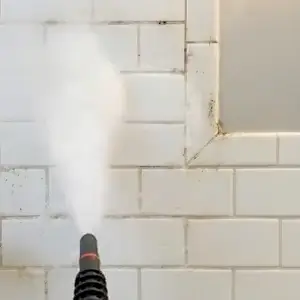
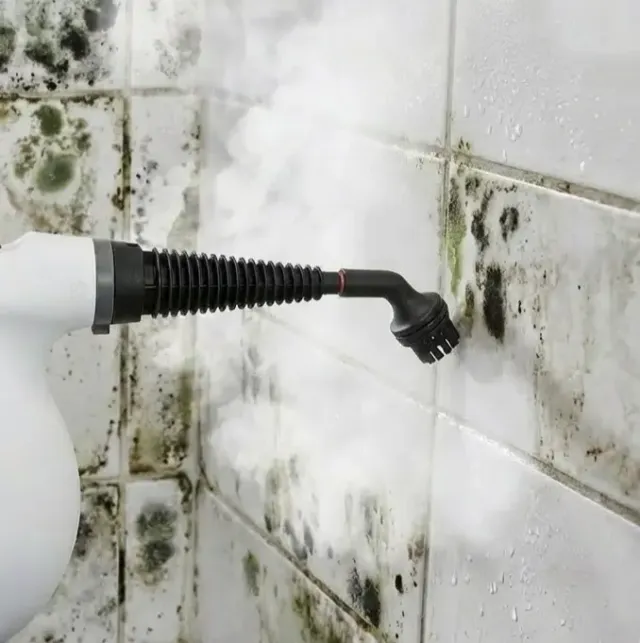
A steam cleaner heats plain tap water and pushes it out under pressure. The heat melts grease and loosens grime, and the jet drives it out of grout lines, seams and corners that cloths never reach. Best for: grout and tile, stovetops and backsplashes, range hoods, shower glass and tracks, sinks and taps, sealed hard floors, car interiors and many heat-tolerant fabrics. Limits: not for unsealed wood, delicate fabrics, painted drywall or electronics. If you are new to it, here is how a steam cleaner works. A handheld model like the Qinux Vapoxis is the most versatile of all the alternatives because the same tool, with different attachments, covers most rooms.
Side-by-side comparison
| Alternative | Best at | Avoid on / limits | Effort |
|---|---|---|---|
| Soap, water, microfiber | Daily dirt, light grease | Limescale, deep grout grime | Low |
| White vinegar | Limescale, glass, soap scum | Natural stone, some finishes; not a registered disinfectant | Low |
| Baking soda | Gentle scrubbing, odors | Needs scrubbing and rinsing | Medium–high |
| Hydrogen peroxide 3% | Light grout, some stains | Colored fabrics; weakens once opened | Low |
| Enzyme cleaner | Pet and organic odors | Slow; only organic stains | Low (but waiting) |
| Steam | Grease, grout, tile, hard surfaces, many fabrics | Unsealed wood, delicate fabrics, electronics | Low |
Never mix these
- Bleach + vinegar (or any acid) — releases chlorine gas.
- Bleach + ammonia — releases toxic chloramine vapors.
- Hydrogen peroxide + vinegar in one bottle — forms a corrosive acid. Use them one after the other, not together.
A simple rule: one product at a time, wipe or rinse, then move on. Steam sidesteps the problem entirely, because there is nothing to mix. (Shopping for someone who wants fewer bottles at home? See is a steam cleaner a good gift.)
A chemical-free routine that actually works
- DailySoapy water and microfiber on counters, the table and the sink.
- WeeklySteam the stovetop, backsplash, shower glass, grout lines and bathroom floor. About 15 minutes for both rooms.
- As neededVinegar on taps and kettle scale; baking soda paste on stubborn sink spots; enzyme cleaner for pet accidents.
- MonthlySteam the range hood filter area, window tracks, the toilet base and the fridge seals.
For the kitchen specifically, see our step-by-step guide on how to remove kitchen grease without harsh chemicals.
Our recommendation: Qinux Vapoxis
If you want one alternative that replaces most of the bottles under your sink, the Qinux Vapoxis is the one we recommend. The other options each solve one job: vinegar for scale, baking soda for scrubbing, enzymes for pet odors. The Vapoxis tackles the jobs that usually send people back to strong sprays, such as greasy stovetops, gray grout and soap-scum glass, with nothing but hot steam from tap water. It is made exactly for a home that wants a deep clean without the fumes or the residue.
- Just tap water — no detergents, no residue, no fumes around kids and pets.
- Hygienic clean — the maker states its steam eliminates up to 99.9% of bacteria on treated surfaces.
- Melts grease and lifts grime — heat does the work that scrubbing and strong sprays used to do.
- Attachments for every surface — brushes for tile and grout, a squeegee for glass, angled nozzles for corners and seams.
- Handheld and quick to heat — light enough for the stovetop, the shower and the car.
Customers rate it 4.8/5 on the official site, and 94% say they would recommend it. A single unit is $109, and bundle pricing drops to $79 per unit in the 5-pack (the 2-pack at $99 each is the most popular). Free shipping, a launch discount of up to 50% and a 14-day money-back guarantee. Sold only through the official website.
Want the full picture first? Our complete Vapoxis review covers room-by-room results and what is in the box, the home page has a short overview with current prices, and what can you steam clean lists which surfaces take steam and which do not. Always follow the maker’s instructions for the steamer and for the surface you are cleaning.
Frequently asked questions
What can I use instead of harsh chemical cleaners?
For most everyday cleaning, warm water with a little dish soap, a microfiber cloth, white vinegar for limescale and glass, baking soda as a gentle scrub and deodorizer, 3% hydrogen peroxide for some stains, enzyme cleaners for organic stains and odors, and steam for grout, tile, stovetops and other heat-tolerant hard surfaces. Each one has a job it does well and surfaces it should not touch.
Is vinegar a disinfectant?
Household vinegar is a good cleaner for mineral deposits, soap scum and glass, but it is not registered as a disinfectant by the EPA. If you need to disinfect a surface to a specific standard, use a product registered for that purpose and follow its label. For everyday hygiene on heat-tolerant surfaces, many people use steam instead of chemicals.
What cleaning products should never be mixed?
Never mix bleach with vinegar or other acids, and never mix bleach with ammonia: both combinations release toxic gases. Do not mix hydrogen peroxide and vinegar in the same container either. Use one product, rinse or wipe, then use the next if you need it.
Does baking soda and vinegar clean better together?
Not really. Baking soda is a base and vinegar is an acid; mixed together they fizz and largely neutralize each other, leaving mostly salty water. Use them separately: baking soda as a paste for scrubbing, vinegar afterwards as a rinse for mineral residue.
Is steam cleaning really chemical-free?
Yes. A steam cleaner uses only heated tap water. The heat loosens grease and grime and the pressure pushes it out of grout lines and corners. The maker of the Qinux Vapoxis states its steam eliminates up to 99.9% of bacteria on treated surfaces. Always check that a surface tolerates heat and moisture first.
Where should I not use vinegar or steam?
Avoid vinegar on natural stone such as marble, granite and travertine, on waxed or unsealed wood and on some metal finishes. Avoid steam on unsealed wood, laminate with open seams, delicate fabrics, painted drywall and electronics. Our guide to what you can and cannot steam clean has the full list.