The quick answer
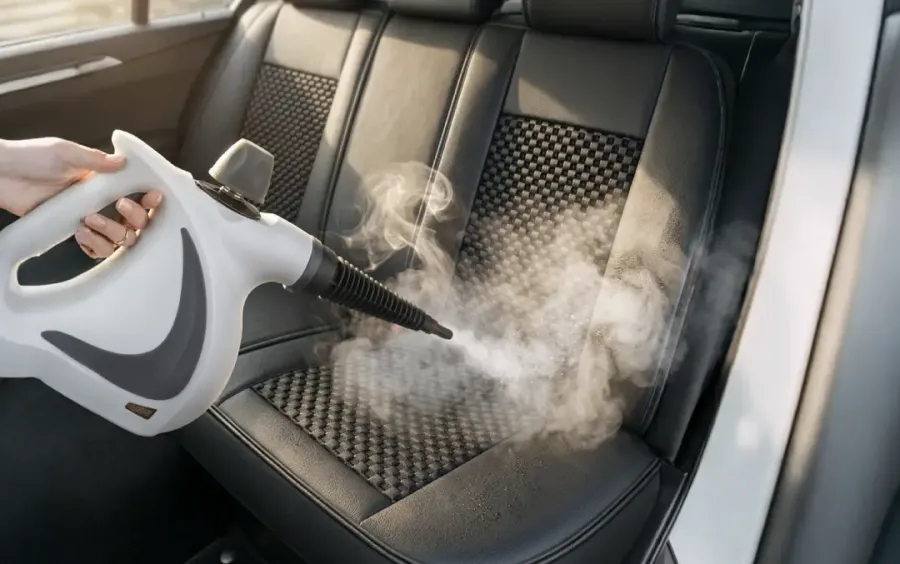
To steam clean car seats, vacuum thoroughly first, test a hidden spot, then work in small sections with a brush or cloth-covered nozzle, moving steadily from top to bottom. Hold the steam a few seconds longer on stains, wipe with a microfiber cloth as you go, and let the seats air-dry with the doors or windows open. Never soak the fabric, and keep steam away from electronics, screens and airbag areas.
Car interiors take a beating: coffee drips, crumbs in every seam, sticky kid fingerprints, muddy mats and that faint smell that never quite goes away. Professional detailing is great, but it is not cheap, and spray cleaners often leave a residue that attracts more dirt. A handheld steam cleaner lets you get a detail-style clean at home using just water. Here is exactly how to do it.
What you need
- A vacuum with a crevice tool — for crumbs and grit before any steam touches the fabric.
- A handheld steam cleaner — with a brush, a nozzle and a cloth cover for fabric.
- Several microfiber cloths — to wipe away the loosened dirt and moisture.
- A soft upholstery brush — to lift the nap of the fabric afterwards.
- Optional: a fabric-safe upholstery cleaner — only for heavy stains, used as the label directs.
How to steam clean cloth car seats: step by step
- Pick a dry day and open the doorsPark in the shade with good airflow. Open the doors so steam and moisture can escape while you work and the seats can dry afterwards.
- Vacuum everythingGo deep into the seams, under the seats and between the cushions. Steam on top of loose crumbs just turns them into paste.
- Check the label and test a hidden spotLook for a care code under the seat or in your owner’s manual, then try the steam on a small, out-of-sight area first.
- Work in small sectionsUsing the brush or a cloth-covered nozzle, move slowly from the top of the seat back down to the cushion, overlapping your strokes.
- Wipe as you goSteam loosens the dirt; a clean microfiber cloth lifts it out. Fold the cloth often so you are always wiping with a clean side.
- Treat stains a little longerHold the steam on a spill for a few extra seconds, gently agitate with the brush, then blot. Repeat rather than soaking the spot.
- Brush and dryBrush the fabric in one direction so it dries evenly, then leave the doors or windows open until every seat is completely dry.
The rest of the interior, area by area
| Area | Best attachment | Tip |
|---|---|---|
| Cloth seats | Brush or cloth cover | Keep moving; never soak the fabric |
| Floor mats (fabric) | Brush | Take them out, steam and let them dry in the sun |
| Rubber mats | Jet nozzle | Blast the grooves, then rinse or wipe |
| Cup holders & console | Jet or angled nozzle | Softens sticky drink residue in seconds |
| Door panels & pockets | Cloth cover | Wipe immediately; avoid window switches |
| Air vents | Angled nozzle | Quick bursts only, then wipe the slats |
| Windows (inside) | Squeegee | Steam, squeegee, then buff with microfiber |
What not to steam in your car
- Touchscreens, instrument clusters and electronics — heat and moisture do not belong near anything electrical.
- Airbag covers — the steering wheel hub, dashboard panels and seat sides marked “airbag”; wipe these with a barely damp cloth instead.
- Switches, buttons and speaker grilles — moisture can get inside.
- Leather or delicate trim for long periods — if you steam at all, keep it brief with a cloth over the nozzle and follow the maker’s care advice.
- Headliners — the glue that holds the ceiling fabric can loosen with heat and moisture. Spot-clean gently by hand.
Common mistakes
- Skipping the vacuum — it makes everything harder.
- Holding the nozzle in one place — the fabric gets too wet and dries slowly (the same rule applies when you steam clean a mattress).
- Closing the car up damp — trapped moisture can leave a musty smell. Dry fully first.
- Overusing sprays — leftover residue attracts new dirt. Steam and a clean cloth leave nothing behind.
The tool that makes it easy: Qinux Vapoxis
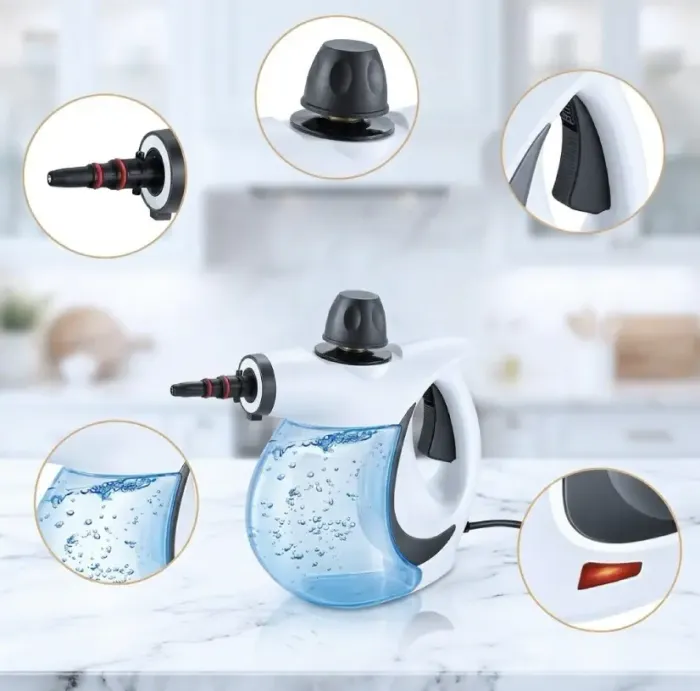
A car interior is a job of a hundred small spots, which is exactly where a handheld steam cleaner beats a steam mop or a bucket of soapy water. The Qinux Vapoxis is compact enough to use inside the car, heats up quickly and cleans with just water — no harsh chemicals left behind on the seats your family sits on. It comes with a full set of attachments: jet and angled nozzles for cup holders and vents, a round brush for fabric and mats, a window squeegee, a microfiber cover for upholstery and an extension hose to reach under the seats. The maker says its steam helps eliminate up to 99.9% of bacteria on treated surfaces.
Owners rate it 4.8/5 on the official site. If you want the full picture first, our Vapoxis review covers room-by-room performance, and our list of what you can (and can’t) steam clean helps you plan the rest of the house. Comparing tools? See handheld steam cleaner vs. steam mop vs. sprays, or head back to our home page.
A quick monthly car-interior routine
- Shake out and vacuum the mats and seats.
- Steam the cup holders, console and door pockets.
- Spot-steam any new spills on the seats.
- Steam and squeegee the inside of the windows.
- Leave the doors open for a while so everything dries.
Always follow the manufacturer’s instructions for your steam cleaner and the care guidance in your car’s owner’s manual.
Our recommendation: Qinux Vapoxis
If you want that fresh, just-detailed feeling every month without paying for a detailer every month, the Qinux Vapoxis is the steamer we recommend. A car is the perfect job for it: tight spaces, sticky cup holders, crumbs in every seam and seats your family sits on every day, where you would rather not leave chemical residue behind.
- Small enough for the cabin — a compact handheld unit you can work with between the seats, plus an extension hose for under them.
- An attachment for every row of the table above — brush for seats and mats, jet and angled nozzles for vents and cup holders, squeegee for windows, microfiber cover for door panels.
- Lifts the source of odors — steam loosens the spills and grime in the fabric instead of covering them with fragrance.
- Less water than shampooing — seats dry faster, so the car is ready to drive the same day.
Owners rate it 4.8/5 on the official site. A single unit is $109, going down to $79 per unit on the 5-pack, with free shipping and a 14-day money-back guarantee, and the same unit cleans the kitchen and bathroom too.
Frequently asked questions
Is it safe to steam clean car seats?
Yes, for most cloth seats. Steam loosens dirt, sticky spills and odors using only water. Keep the nozzle moving, do not soak the fabric, and test a hidden spot first. Avoid steaming electronics, screens and the areas where airbags are housed.
Can you steam clean leather car seats?
Leather and leather-look seats need extra care. If you use steam at all, keep it brief and light with a cloth over the nozzle, wipe straight away and follow the seat or car maker’s care guidance. Many owners prefer a dedicated leather cleaner and conditioner for leather.
How long do car seats take to dry after steam cleaning?
Because steam uses very little water compared with shampooing, seats usually dry much faster. Drying time depends on the fabric, the weather and airflow. Wipe with a microfiber cloth, leave the doors or windows open in a dry, sheltered spot and make sure the seats are fully dry before closing up the car.
Does steam remove odors from a car?
Steam can help a lot with odors that come from spills, crumbs and grime trapped in fabric and mats, because it lifts the source instead of masking it. For lingering smells, clean the floor mats and seat seams thoroughly and let the interior air out well.
Do I need chemicals to clean car upholstery?
For everyday dirt, sticky spots and fingerprints, steam and a microfiber cloth are often enough. For heavy stains, a fabric-safe upholstery cleaner can be used as a pre-treatment, following its label, and then lifted with steam.