
The quick answer
Osoji is Japan’s year-end “big cleaning”: in the last days of December, families deep clean the whole home so they can welcome the New Year with a fresh start. They work from top to bottom, focus on the spots ignored all year (vent hoods, windows, bathrooms, the entrance) and finish before January 1. You can borrow the idea this December in a weekend or two, and a handheld steamer such as the Qinux Vapoxis handles the greasy and grimy jobs with plain water.
Most Americans think of spring cleaning. In Japan, the big clean happens in winter. As the year ends, households, offices and schools all set aside time for osoji, a deep clean that is part chore, part ritual and part fresh start. It is one of those traditions that makes immediate sense once you hear it: why carry last year’s dust into the new one?
What osoji means and where it comes from
The word 大掃除 (ôsôji) simply means “big cleaning.” Its roots are usually traced to susuharai, “soot sweeping,” a ritual cleaning of palaces and temples in the Heian period (794–1185). In the Edo period, mid-December became the customary day for sweeping away soot, and over time the custom moved into ordinary homes and toward the very end of the year.
Traditionally, the cleaning prepares the home to welcome the New Year and the good fortune it brings. Many families still finish around December 28, while surveys in Japan show plenty now clean on the 29th or 30th. One rule stays the same: you do not clean on New Year’s Day, so you do not “sweep away” the luck that just arrived.
How Japanese families do osoji
- Everyone has a job. Osoji is a family activity. Kids clean their own rooms and desks; adults take the kitchen, bathroom and high places. In many Japanese schools, students clean their classrooms year-round, and the year-end clean is simply a bigger version.
- Top to bottom. Dust falls, so light fixtures, the tops of shelves and the upper walls come first, floors last.
- Back of the house to the front. Cleaning moves from the innermost rooms toward the entrance, so the dirt literally leaves through the door.
- The forgotten spots. The range hood and its filter, window tracks and screens, the bathroom ceiling and drains, behind the fridge and the genkan (entryway).
- Letting go. Osoji is also a time to throw out or donate what you no longer use, so the new year starts lighter.
An osoji plan for an American home
You do not need to wait until December 28 or clean the whole house in one day. Here is a simple version that fits a normal schedule, in the traditional order.
| Step | Area | What to do | Where steam helps |
|---|---|---|---|
| 1 | Let go | Clear counters, closets and the fridge; donate or recycle | — |
| 2 | High places | Light fixtures, ceiling fan blades, tops of cabinets | Greasy cabinet tops in the kitchen |
| 3 | Kitchen | Range hood and filter, stovetop, backsplash, oven door | Baked-on grease and grout lines |
| 4 | Bathroom | Grout, shower glass, faucets, drains, the exhaust fan | Soap scum, mildew spots, fixtures |
| 5 | Windows | Glass, tracks, sills and screens | Gritty window tracks and glass |
| 6 | Living areas | Behind furniture, sofa, mattress, curtains | Refreshing upholstery and mattresses |
| 7 | Entrance | Front door, mat, shoe area, light switches | Door handles and scuffed tile |
| 8 | Floors | Last of all, from the back rooms toward the door | Tile and grout floors |
Hosting family over the holidays as well? Our holiday deep cleaning checklist spreads these jobs over two weeks so the house is ready before guests arrive.
What osoji gets right (and why it is worth copying)
Strip away the ritual and osoji is a very practical cleaning system. Doing a deep clean once a year at a fixed time means the jobs that never feel urgent, like the vent hood filter or the window tracks, actually get done. Cleaning top to bottom means you never re-clean a floor. And tying it to the New Year turns a chore into something closer to a celebration: the year ends, the house is reset, and you start January in a home that feels lighter. Not sure which areas need it most? Here are the 8 signs your home needs a deep clean.
Osoji without harsh chemicals
Traditional osoji was done with water, cloths and brooms, and that spirit fits modern homes surprisingly well. A deep clean in a closed-up winter house is exactly when you least want strong chemical fumes. Heat and water do most of the work: hot steam softens kitchen grease, lifts grime from grout and rinses soap scum from fixtures, and a microfiber cloth wipes it away. That is why we lean on a handheld steamer like the Qinux Vapoxis for the kitchen and bathroom steps. For more on what you can safely steam, see our list of what you can and can’t steam clean.
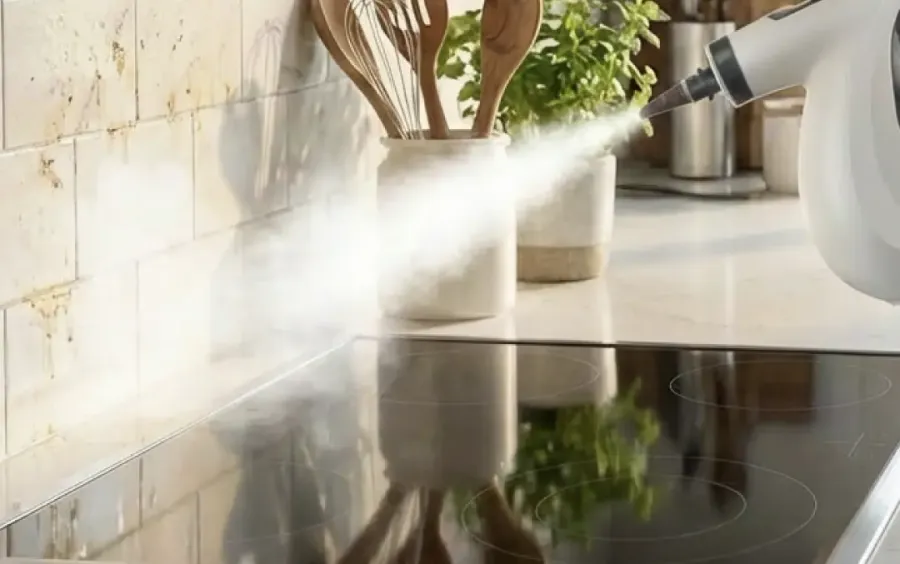
Our recommendation: Qinux Vapoxis
The kitchen and bathroom are the heart of osoji, and they are where a deep clean usually stalls: baked-on grease on the stovetop, gray grout, crusty faucets. The Qinux Vapoxis is the tool we recommend for exactly those steps. It is a compact handheld steamer that heats tap water into steam in minutes, so you can work through the range, the backsplash, the shower and the window tracks in one session, with no sprays and no fumes in a closed winter house.
- Just tap water — nothing extra to buy and no chemical smell while the windows are shut.
- Hygienic clean — the maker states its steam eliminates up to 99.9% of bacteria on treated surfaces.
- Attachments for every step — brushes for grout and stovetops, a nozzle for corners and tracks, a squeegee for glass.
- Small and light — easy to carry from the kitchen to the bathroom to the entrance.
- One tool for the whole home — the same steamer refreshes mattresses, sofas and car seats.
Customers rate it 4.8/5 on the official site, and 94% say they would recommend it. A single unit is $109, with free shipping, a launch discount of up to 50% and a 14-day money-back guarantee. Sold only through the official website.
Want the full picture first? Our complete Vapoxis review covers room-by-room results and what is in the box, and the Vapoxis home page has a short overview with current prices. Always test a hidden spot first and follow the steamer’s instructions and your surfaces’ care guidelines.
Frequently asked questions
What is osoji?
Osoji (大掃除, often written oosouji) means “big cleaning.” It is the Japanese tradition of deep cleaning the home, and often the workplace and schools, at the end of December, so the household can start the New Year fresh.
When is osoji done?
Traditionally in the last days of December, with December 28 often cited as the classic date. In practice many families clean on December 29 or 30. Cleaning on New Year’s Day itself is traditionally avoided.
Where does the osoji tradition come from?
It is usually traced back to susuharai (“soot sweeping”), a ritual cleaning of palaces and temples dating back to the Heian period. Over the centuries it became a household custom tied to welcoming the New Year.
What do you clean during osoji?
The spots that get skipped the rest of the year: high places such as light fixtures and the tops of cabinets, windows and screens, the kitchen range and vent hood, the bathroom, behind furniture and the entrance. Work from top to bottom and from the back of the home toward the door.
Can I do osoji without harsh chemicals?
Yes. Hot water, microfiber cloths and a handheld steam cleaner handle grease, grime in grout and bathroom buildup well, with no strong chemical smell in the house. Always check that a surface is steam-safe first.