The quick answer
Most steam cleaner problems have a simple cause: not enough water, not enough heat-up time, a loose cap or tank, an overfilled tank or a nozzle partly blocked by minerals. Unplug, let it cool, check those five things and try again with short bursts of steam. If you see a steady leak, smell burning or nothing changes after the checks, stop and contact support.
A handheld steam cleaner is one of the simplest tools in the house: water goes in, heat turns it into steam, steam does the cleaning. That simplicity is also good news when something feels off, because there are only a few things that can cause it, and most of them take a minute to fix. Below are the eight situations people run into most often in their first weeks, what usually causes each one, and exactly what to do. Before any check, the golden rule: unplug the unit and let it cool, and follow the safety instructions in your manual.
At a glance: symptom, likely cause, fix
| What you notice | Most likely cause | What to do |
|---|---|---|
| No steam at all | Empty tank, not heated yet, cap not closed | Refill, close the cap firmly, wait for the full heat-up |
| Weak or sputtering steam | Low water or a partly blocked nozzle | Top up, clear the nozzle as the manual shows |
| Spitting hot water | Overfilled, not hot yet, trigger held down | Fill to the mark, wait, use short bursts |
| Takes long to heat | Very cold water, extension cord, outlet | Use room-temperature water, a wall outlet |
| Drips from the attachment | Condensation on a cool nozzle | Point at a towel for a few seconds first |
| Streaks on glass and mirrors | Slow wipe, dirty cloth or blade | Steam, then one smooth squeegee stroke |
| Grime is not lifting | Moving too fast, wrong attachment | Slow down, use the brush, wipe right away |
| Steady leak or burning smell | Fault that needs support | Stop, unplug, contact support |
The 8 problems, one by one
1. No steam at all
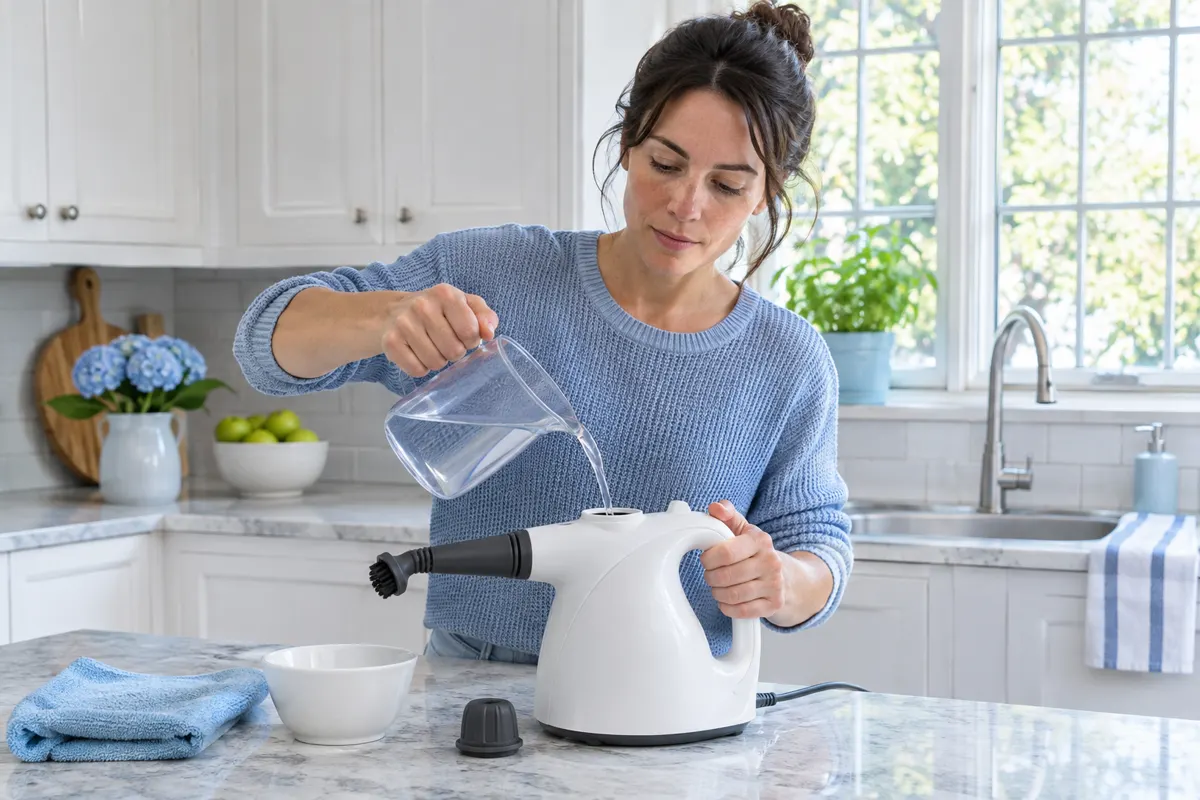
Nine times out of ten the tank is empty or nearly empty, the unit has not finished heating, or the safety cap is not screwed down fully (many steamers will not build steam with a loose cap). Unplug it, let it cool, refill with tap water to the marked level, close the cap firmly, plug it back in and wait for the full heat-up time before pressing the trigger. Our guide on how a steam cleaner works explains why heat-up time matters so much.
2. Weak or sputtering steam
If the steam comes out in gasps, check the water level first: as the tank runs low, output drops. If the tank is full and the steam is still weak, the nozzle or attachment may be partly blocked by mineral deposits, especially in hard-water areas. With the unit unplugged and cold, remove the attachment, rinse it and clear the nozzle the way your manual describes. Emptying the tank after each session helps prevent buildup in the first place.
3. Spitting water instead of steam
Spitting means some of the water is leaving as liquid instead of vapor. The usual causes are an overfilled tank, pressing the trigger before the unit is fully hot, or holding the trigger down for a long time so the boiler cannot keep up. Fill only to the line, wait for the ready signal and work in short bursts of a few seconds. Aim the first burst at a towel or the sink, not at the surface you are cleaning.
4. It takes a long time to heat up
Very cold water from a winter tap takes longer to heat, and an extension cord or a loose power strip can also slow things down. Use room-temperature tap water, plug directly into a wall outlet and give it the full heat-up time listed in the manual before judging.
5. Drips from the attachment
When hot steam meets a cool brush or nozzle, a little condenses back into water and drips out. That is normal for the first few seconds. Point the attachment at a towel for a moment so it warms up, then start cleaning. If drips continue, the tank may be overfilled (see problem 3).
6. Streaks on glass and mirrors
Steam loosens grime on glass beautifully, but the finish depends on the wipe. Steam a small section, then pull the squeegee down in one smooth stroke and wipe the blade on a microfiber cloth between passes. Work from top to bottom, and finish edges with a dry cloth. Avoid steaming very cold window glass in winter: let it warm up indoors first, as sudden temperature changes are hard on glass.
7. Grime is not lifting
Steam needs a moment on the surface to soften grease and soap scum. Move slowly, hold the nozzle close (but not touching delicate surfaces), use the right attachment, such as the brush for grout and stovetops, and wipe the loosened dirt away immediately with a cloth before it cools. Our guides to cleaning grout without scrubbing and removing kitchen grease without chemicals show the technique step by step.
8. A steady leak, a burning smell or odd noises
These are the only situations where you should not try to fix it yourself. If water leaks steadily from the body or tank, you smell burning plastic, or the unit makes unusual sounds, stop using it, unplug it, let it cool and contact support. Do not open the housing.
Is it the steamer or the surface?
Sometimes the steamer is working perfectly and the surface is the issue. Unsealed wood, some laminates, delicate fabrics, wallpaper, flat-painted walls and electronics are not good candidates for steam at all (tiled and glossy walls are a different story: see how to use a steam cleaner for walls). If a surface reacts badly, check our list of what you can and can’t steam clean before trying again.
When to contact support
Reach out to the official support through the website if the steamer still does not produce steam after the checks above, if it leaks steadily, or if anything arrived damaged. Have your order number ready and, if you can, a short phone video of the problem; it speeds things up. The Vapoxis comes with a 14-day money-back guarantee counted from the day you receive it, and the team replies within three business days. Our guide on where to buy Vapoxis safely explains how the returns process works.
Why the Vapoxis is easy to keep working
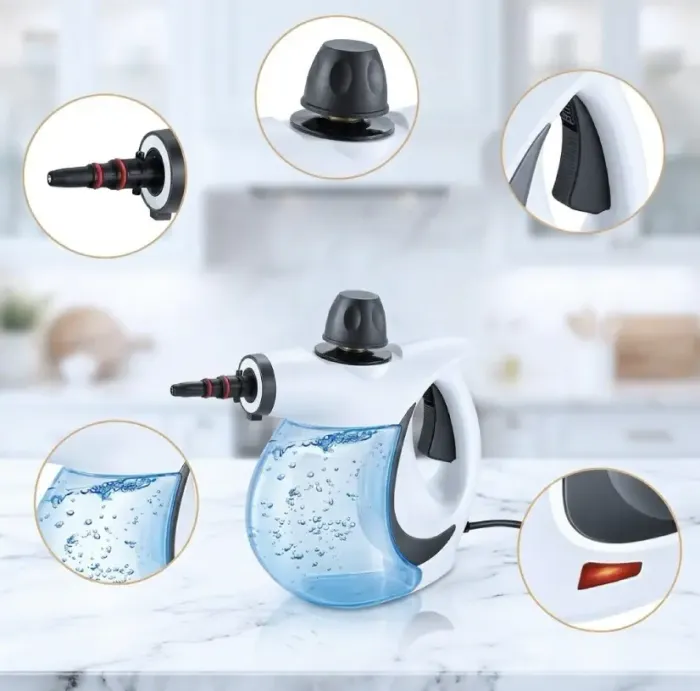
A good steamer makes troubleshooting rare. The Qinux Vapoxis runs on just tap water with no detergents to clog anything, heats quickly, and comes with dedicated attachments for each job, so you are never forcing the wrong nozzle onto a surface. Fill to the line, wait for the heat, use short bursts and wipe as you go: that simple routine is all it asks for.
Our recommendation: Qinux Vapoxis
If you want a steam cleaner that is simple to use and simple to keep running, the Qinux Vapoxis is the one we recommend. It is made exactly for the everyday jobs in this guide, from grout and stovetops to glass and car seats, with nothing more than water and heat.
- Just tap water — no detergents, no residue, no fumes around kids and pets.
- Hygienic clean — the maker states its steam eliminates up to 99.9% of bacteria on treated surfaces.
- Quick to heat — ready for a fast clean of the stovetop or shower.
- Attachments for every surface — brushes for tile and grout, a squeegee for glass, angled nozzles for corners and seams.
- Handheld and light — easy to carry from the kitchen to the bathroom to the car.
Customers rate it 4.8/5 on the official site, and 94% say they would recommend it. A single unit is $109, the most popular 2-pack is $99 each and the 5-pack drops to $79 per unit. Free shipping, a launch discount of up to 50% and a 14-day money-back guarantee. Sold only through the official website.
Want the full picture first? Our complete Vapoxis review covers room-by-room results and what is in the box, and the Vapoxis home page has a short overview with current prices. Always follow the maker’s instructions for the steamer and for the surface being cleaned.
Frequently asked questions
Why is my steam cleaner not producing steam?
The most common reasons are a low or empty water tank, not waiting long enough for the unit to heat up, a cap or tank that is not closed properly, or a nozzle partly blocked by mineral deposits. Unplug it, let it cool, check the water and the cap, clear the nozzle as the manual describes, then try again after the full heat-up time.
Why is my steam cleaner spitting water?
Spitting usually means the water is not fully turning into steam: the tank may be overfilled, the unit may not have finished heating, or you may be holding the trigger down continuously. Fill only to the marked level, wait for the ready signal and use short bursts of steam.
Why does my steam cleaner leave streaks on glass?
Streaks come from wiping too slowly, using a dirty cloth or squeegee blade, or leaving moisture to dry on its own. Steam a section, pull the squeegee straight down in one smooth stroke and wipe the blade between passes.
Can I use tap water in the Vapoxis?
Yes. The maker describes Vapoxis as working with just tap water, no detergents. In very hard-water areas, emptying the tank after each session and following the cleaning advice in the manual helps keep mineral buildup away from the nozzle.
Is it normal for a steam cleaner to drip a little?
A few drops when you start, or when steam condenses on a cool attachment, is normal. A steady leak from the body or the tank is not: stop using it, unplug it and contact support.
What should I do if my Vapoxis still does not work?
Contact the official support through the website with your order number and a short description or video of the problem. Vapoxis comes with a 14-day money-back guarantee counted from delivery, and the team replies within three business days.